
Article Highlights
- The beaches of Porto de Galinhas range from natural pools like Muro Altoto surfing waves at Cupe and Maracaípe.
- The pools at the Vila are visited by jangada, the traditional fishermen's raft, and only at low tide.
- From September to March there is less rain, and the high season runs from December to March.
- At Tur.com you can find jangada tours, diving, scenic flights, and excursions departing from Recife.
The beaches of Porto de Galinhas stretch about eighteen kilometers along the coast of Ipojuca, Pernambuco, and the sea changes from one to another.
At low tide, a coral reef emerges just a few meters from the shore, creating warm water pools with little fish. A few kilometers south, the same sea breaks into waves that attract surfers.
We have organized eight beaches from north to south and added three nearby tours outside Ipojuca. At Tur.com you can book the reef tour or a full day trip departing from Recife.
- How We Chose the Beaches of Porto de Galinhas
- Beaches of Ipojuca, from North to South
- Tours Near Porto de Galinhas
- Which Beach Suits You?
- Frequently Asked Questions
- Experience the Beaches of Porto de Galinhas in Tune with the Tide
How We Chose the Beaches of Porto de Galinhas
To explore the beaches of Porto de Galinhas in order, we go from north to south along Ipojuca. The Vila, the village center, serves as the reference point for distances.
- Muro Alto
- Pontal do Cupe
- Cupe and Borete
- Porto de Galinhas (the Vila)
- Maracaípe
- Pontal de Maracaípe
- Enseadinha
- Serrambi
All eight are in Ipojuca. The tours are in other municipalities or states:
- Praia dos Carneiros, in Tamandaré
- Ilha de Santo Aleixo, with boat transfer from Sirinhaém
- Maragogi, in Alagoas
If you are still undecided between Porto de Galinhas and other coastal destinations, our guide to the best beach destinations in Brazil can help you decide.
If you are staying in Recife and want to see several beaches in one day, this tour passes through the Vila and optionally includes a buggy ride along neighboring beaches:

Beaches of Ipojuca, from North to South
Muro Alto: a natural pool over two kilometers long
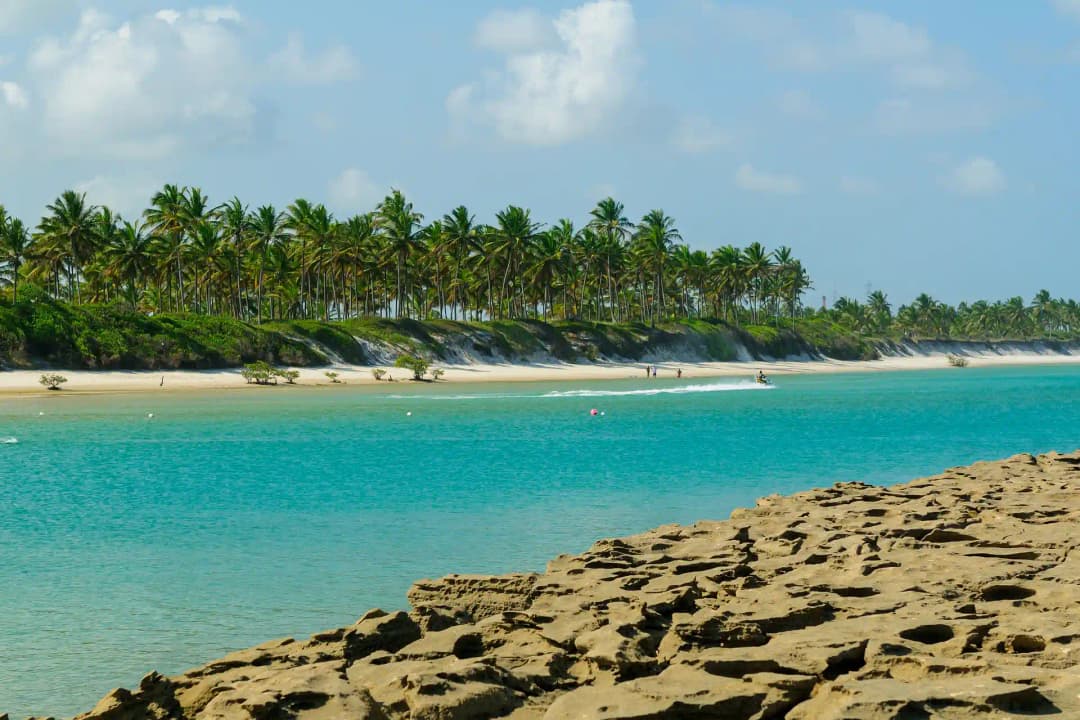
Muro Alto has a reef barrier over two kilometers long that holds back the waves, leaving the water calm and clear. You can reach the pool on foot directly from the sand, no jangada needed.
Kayaking, stand-up paddleboarding, and snorkeling are popular here. The Vila is about nine kilometers away.
Resorts dominate the area and there is no village with shops, so most restaurants are inside the resorts. That’s why many families with children choose this beach.
Further north, Praia de Camboa (or Gamboa) has almost no infrastructure and is a stop on buggy tours.
Pontal do Cupe: the low tide pool
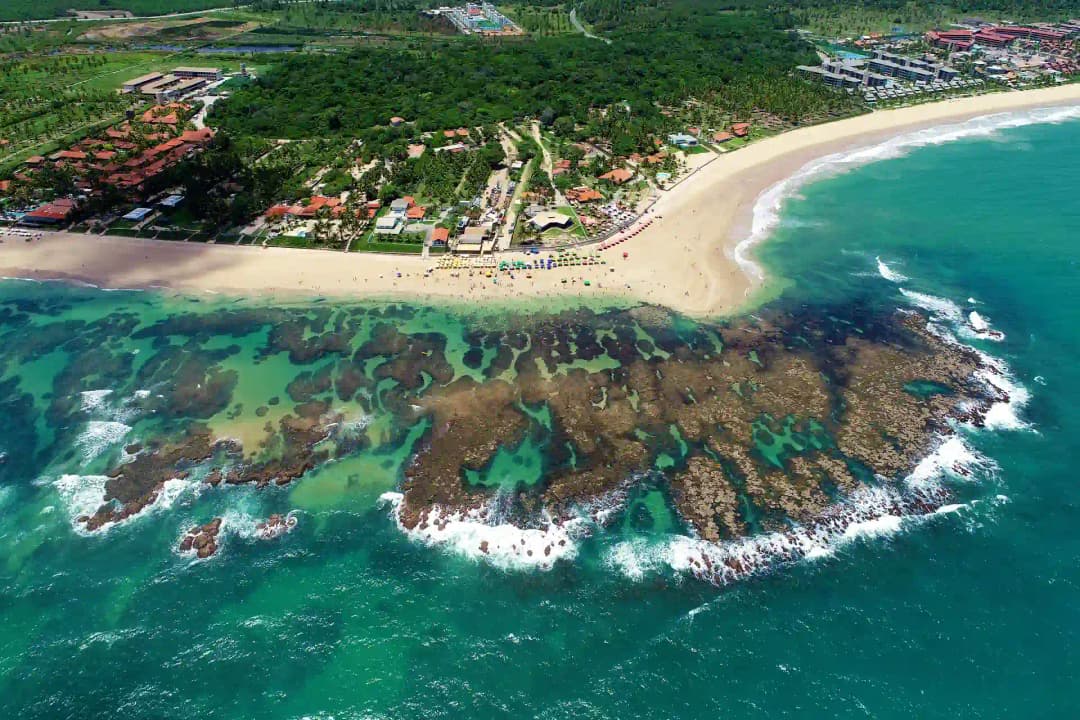
At the northern tip of Cupe beach, a sandbank extends into the sea: this is Pontal do Cupe.
At low tide, a shallow pool of clear blue water with little fish forms. At high tide, the sand strip nearly disappears and waves may appear, so it’s worth checking the tide table.
There are food stalls, tents, and two beach clubs. You can also rent snorkel masks, water shoes, and kayaks. Access is possible by buggy, taxi, ride app, or private vehicle.
Cupe and Borete: waves and surfing on a long beach
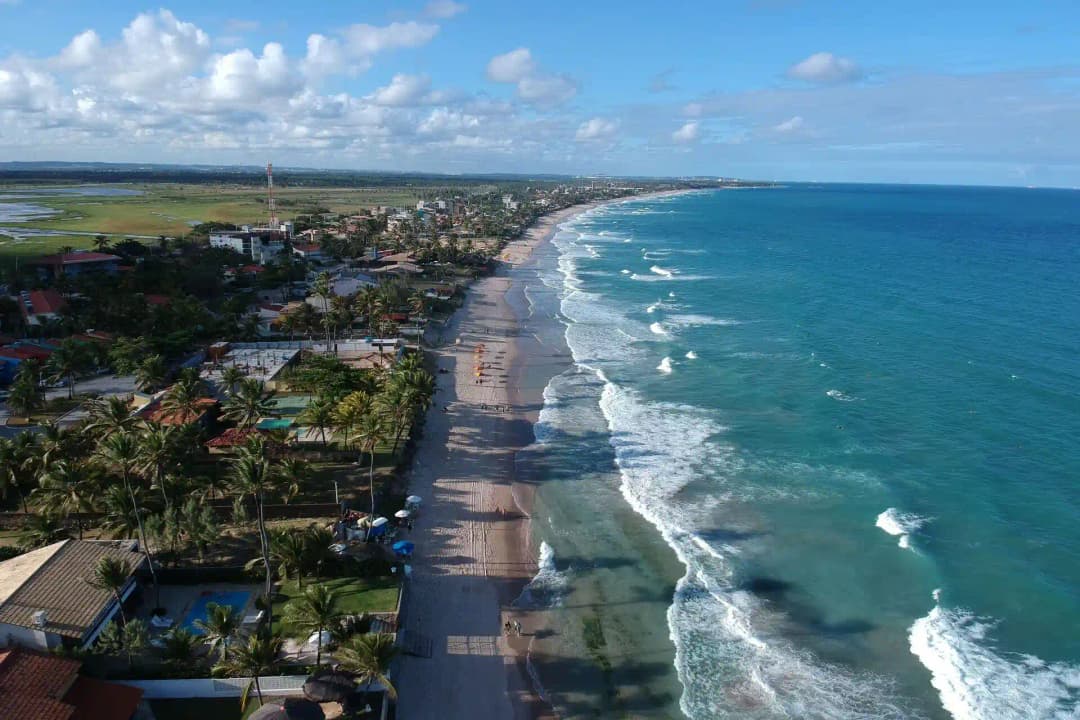
Cupe is the opposite of Pontal: about four and a half kilometers of sand with open sea and strong waves that attract surfers. Outside Pontal, it’s not the calmest sea for swimming.
Heading toward the Vila is Borete, without reefs protecting the shore. The waves are higher and more consistent, making it more of a surfing beach than a swimming spot.
There are few restaurants, but hotels and condominiums exist between one and six kilometers north of the Vila.
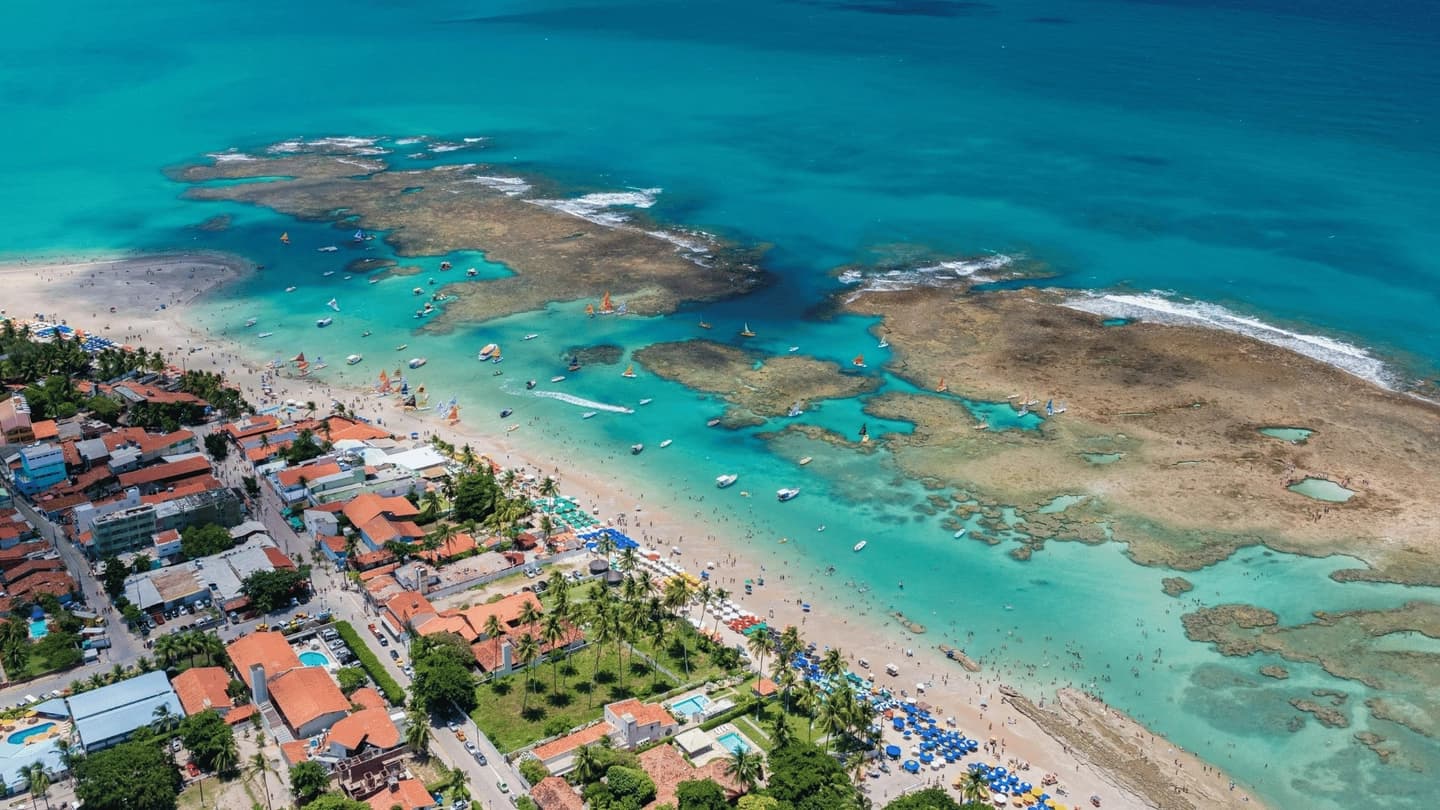
Porto de Galinhas: jangadas heading to the natural pools
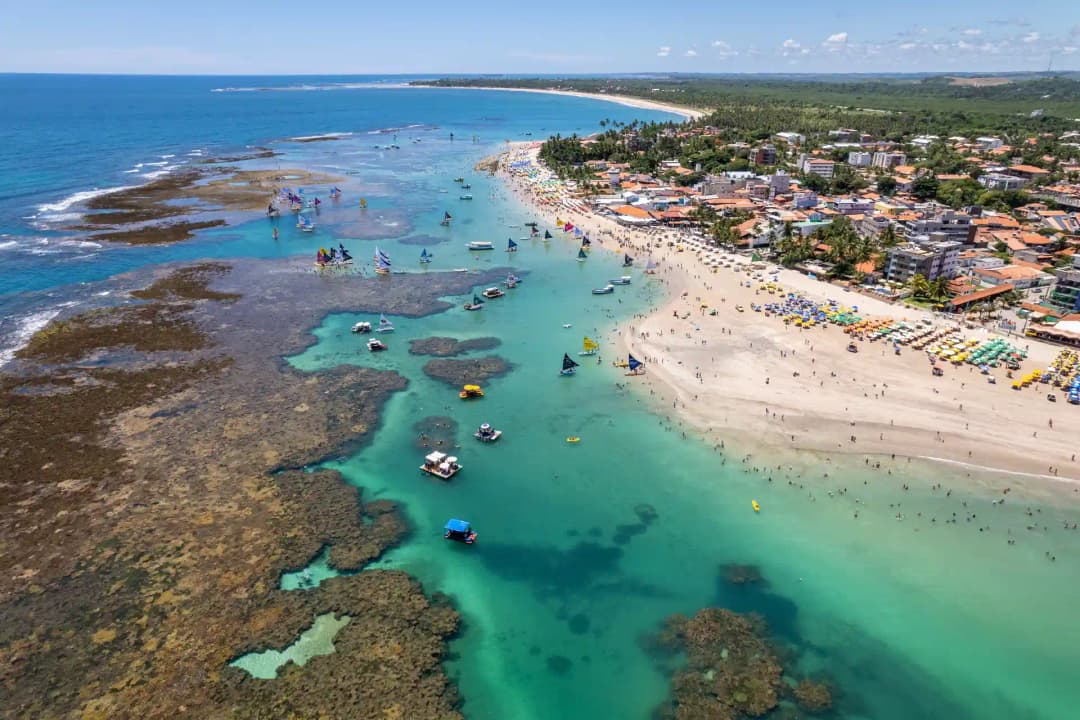
Porto de Galinhas, the Vila beach, is the busiest in the region. It has about four kilometers of sand with bars, shops, and restaurants just behind.
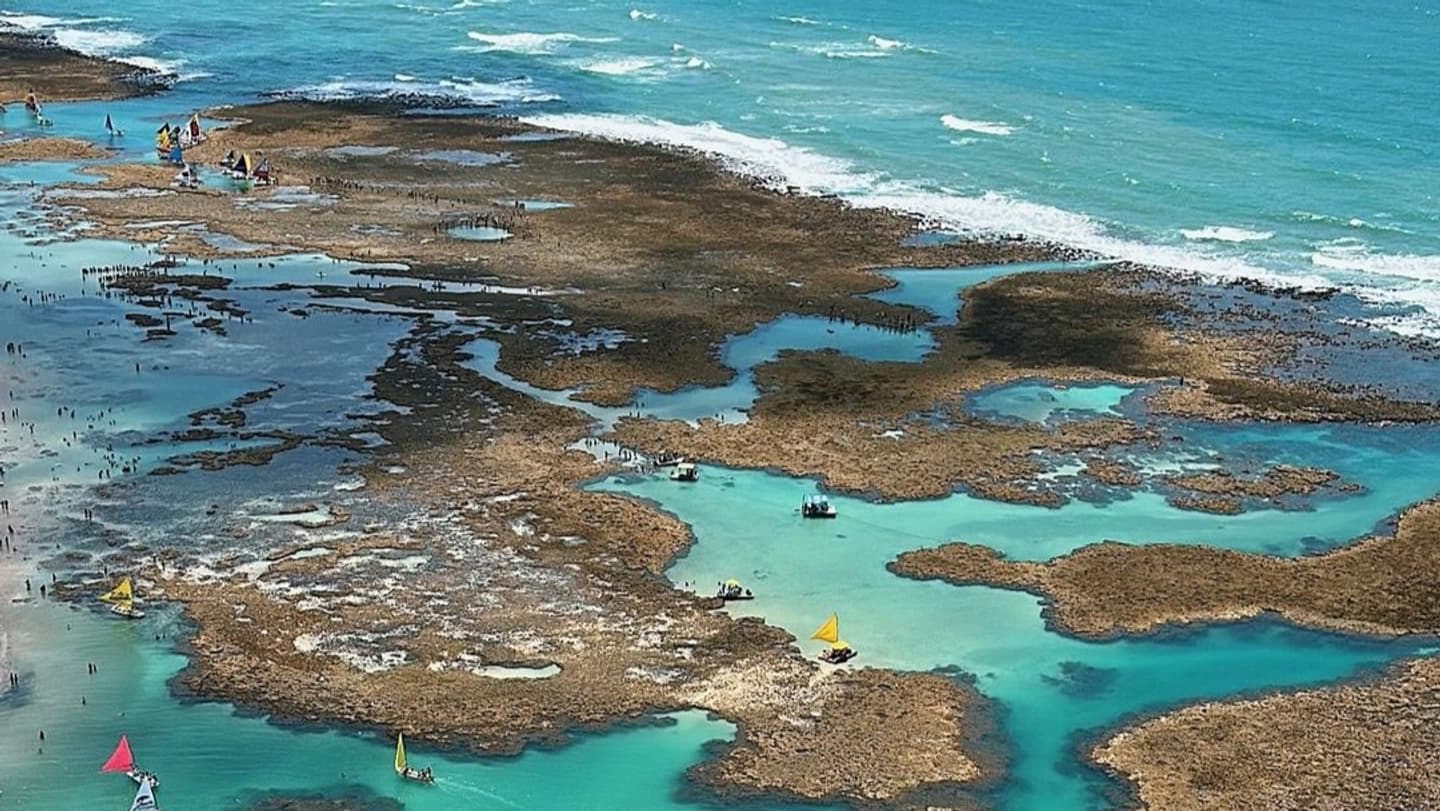
What sets it apart is just a few meters from the shore. At low tide, a reef forms natural pools of warm, clear water with fish.
Jangadas depart about an hour before low tide. At new and full moons, the low tide is lower and the pools appear better.
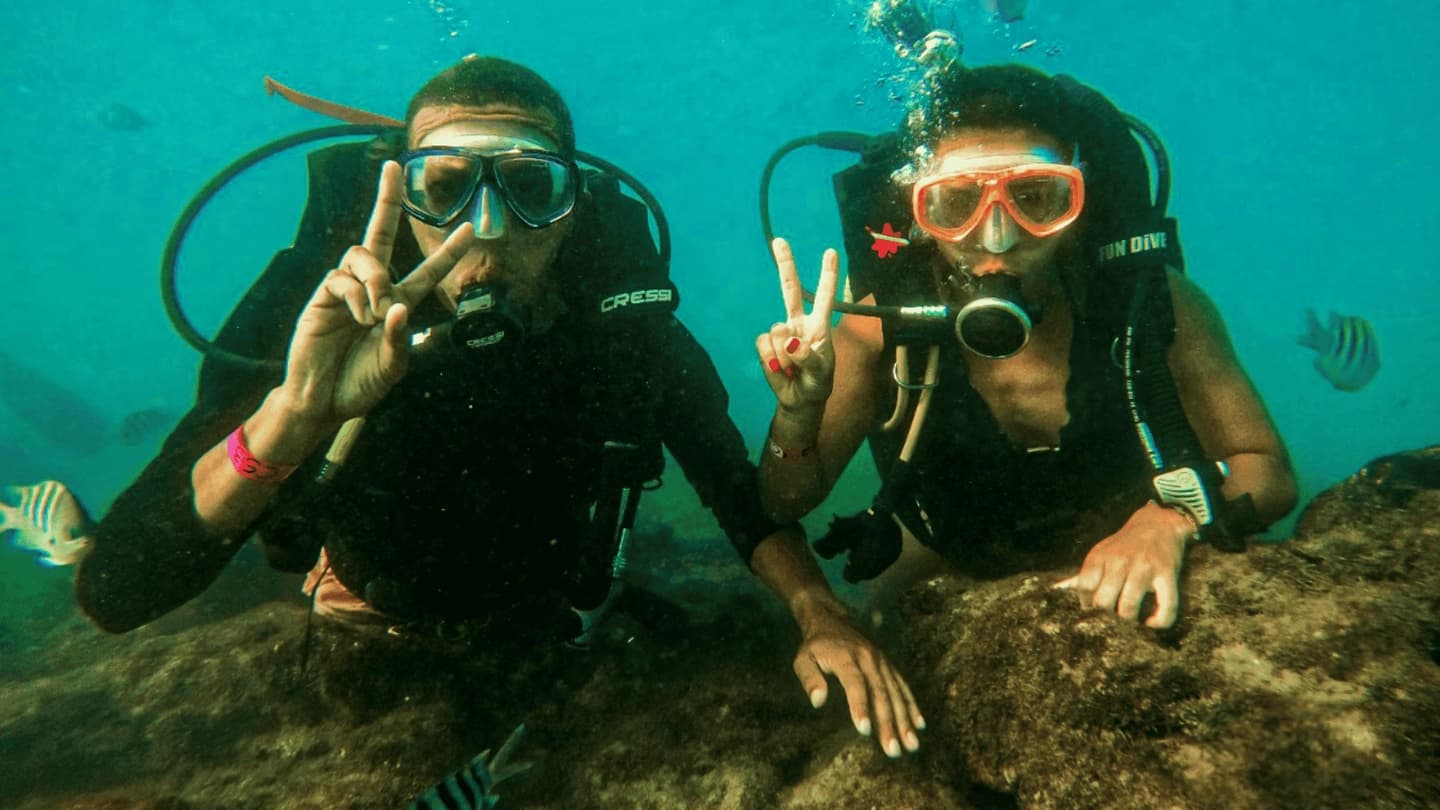
To explore the reef, you can go by jangada with a local guide or dive with an instructor in a beginner dive session:


Maracaípe: surfing among the palm trees
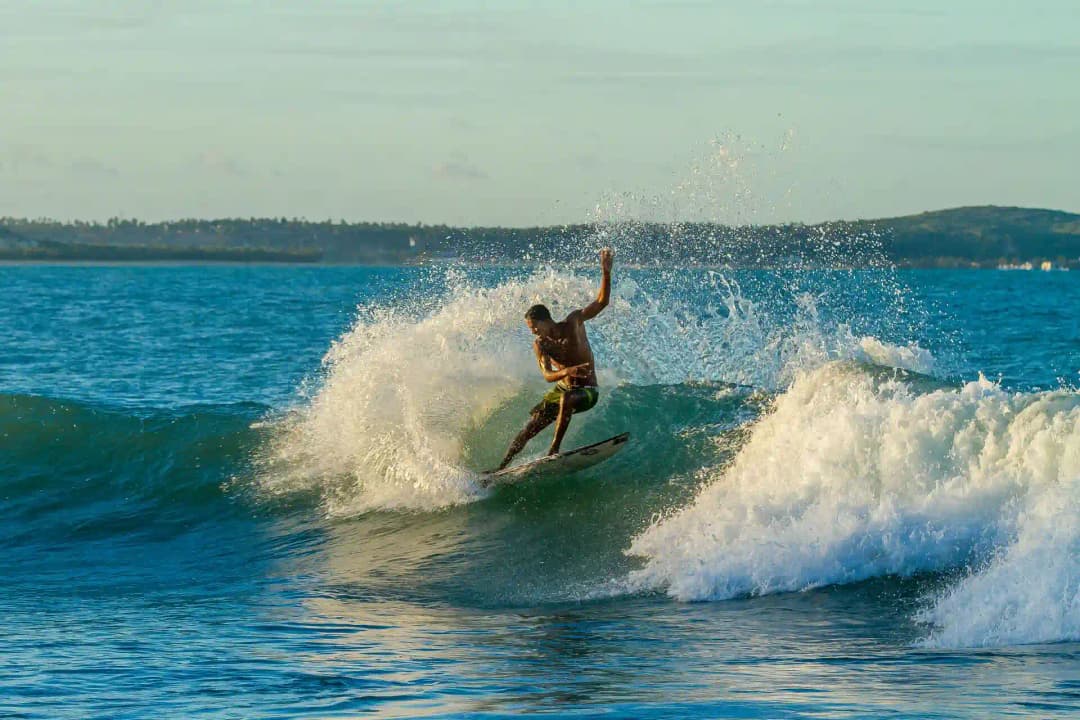
About three kilometers south of the Vila, the atmosphere changes: Maracaípe is a rustic cove with palm trees and one of the main surfing spots in the Northeast.
The waves are high and consistent, with competitions concentrated between August and October. There are surf schools for beginners, but it’s not a calm swimming beach.
In the late afternoon, the bars along the shore play music, and at night there are parties and luaus. Restaurants serve fish, shrimp, and octopus, and you can walk through the palm groves.
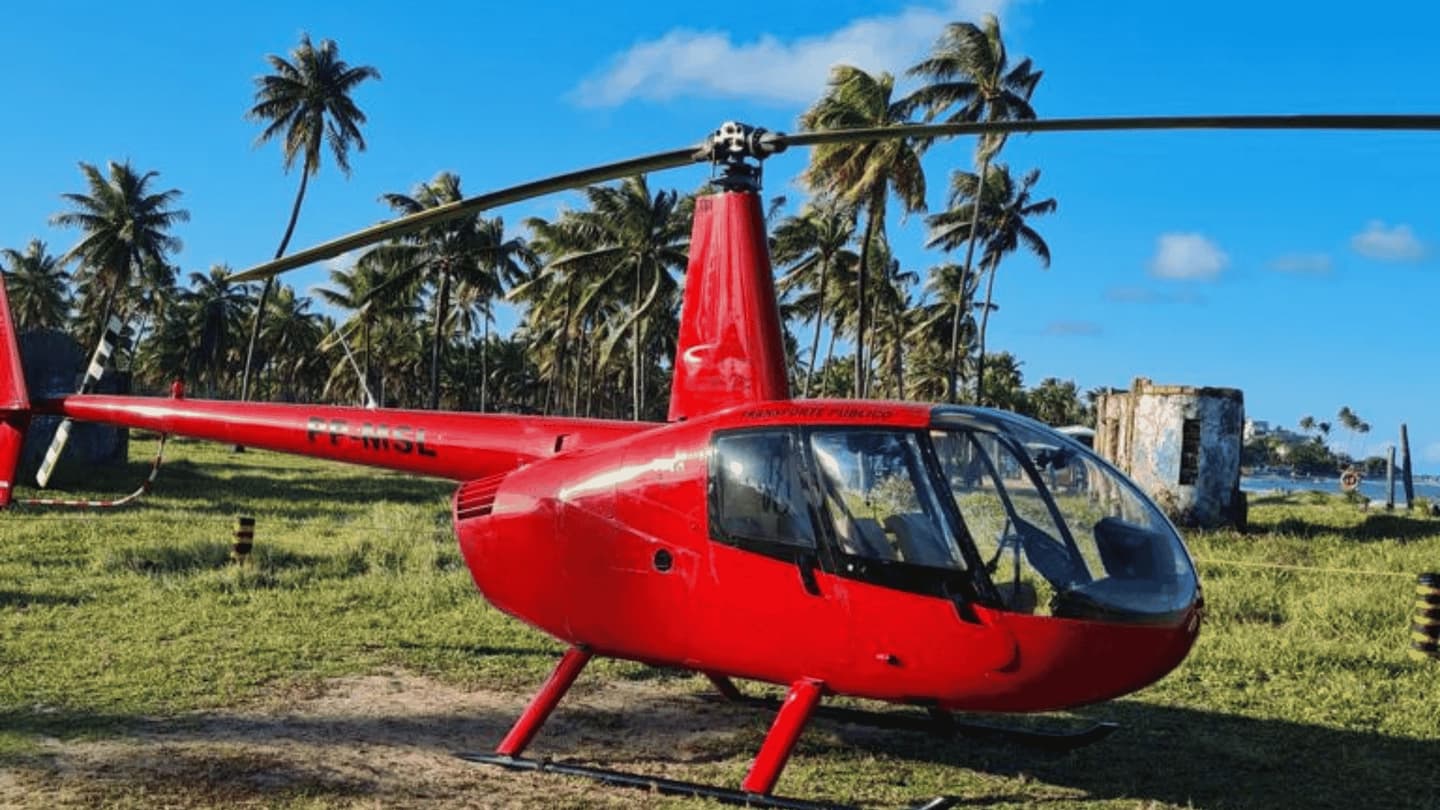
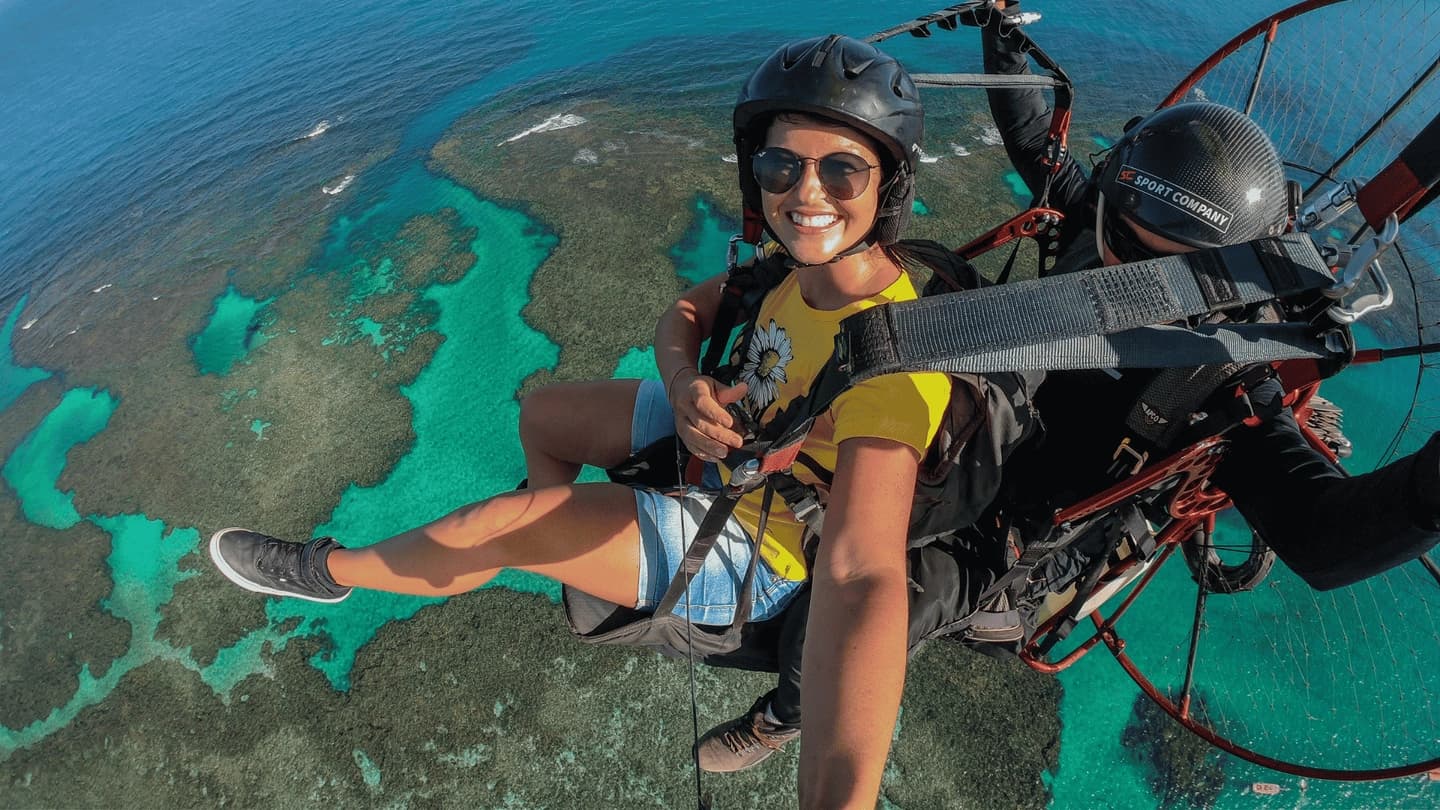
If you prefer to see the coast from above, these two flights depart from Maracaípe:


Pontal de Maracaípe: mangroves and sunset
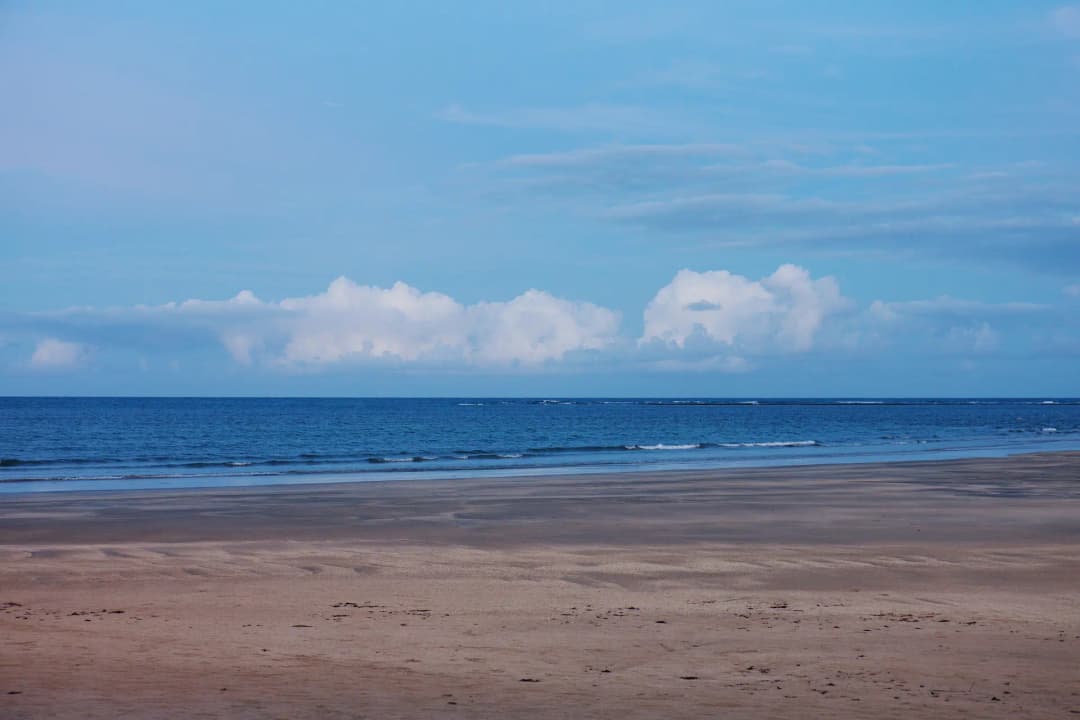
At the south end of the beach, the Maracaípe river meets the sea, and this point is Pontal de Maracaípe. You can walk there from Maracaípe, and the water is calm and shallow, with natural pools at low tide.
The mangrove is part of a municipal natural park of about fifteen hectares, created in 2017. Jangada tours through the mangroves allow you to see seahorses.
It’s also a great spot to watch the sunset, and kitesurfing is practiced here.
Enseadinha: reefs and shallow water
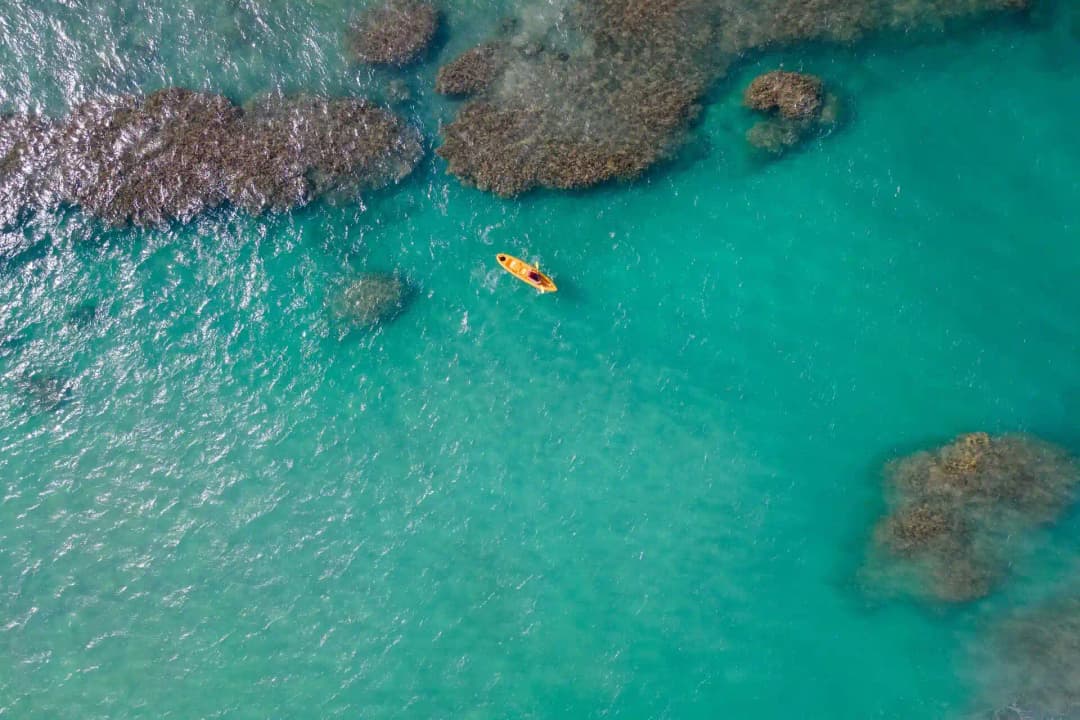
Enseadinha is south of Maracaípe, near the river mouth, protected by reefs. The waves are mild and there are mangroves around.
At low tide, you can cross the river mouth on foot. There are jangada tours through the mangroves, boat and kayak rides, and trails for walking.
Almost all houses are inhabited, and access passes through a gatehouse, so the beach may seem private.
Serrambi: crescent-shaped pools and sunset
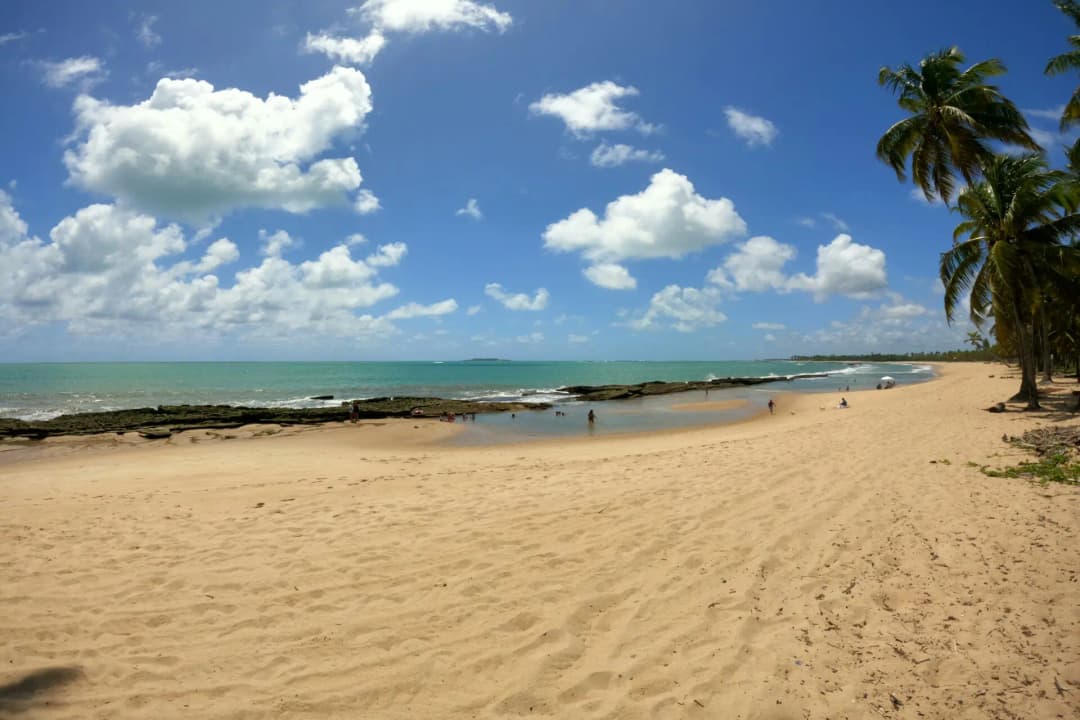
Serrambi has about five kilometers of sand and is more than ten kilometers from the Vila. It alternates between wave sections and calm sea areas, making it good for families.
You can see it from Pontal de Maracaípe across the river, and access is via highway PE-009.
At low tide, reefs form crescent-shaped natural pools good for snorkeling, and nearby there are shipwrecks that can be visited with diving operators. It’s another great place to watch the sunset.
Tours Near Porto de Galinhas
These three places are outside Ipojuca but can be visited in a day trip from Porto de Galinhas or Recife.
Praia dos Carneiros: the little church on the sand
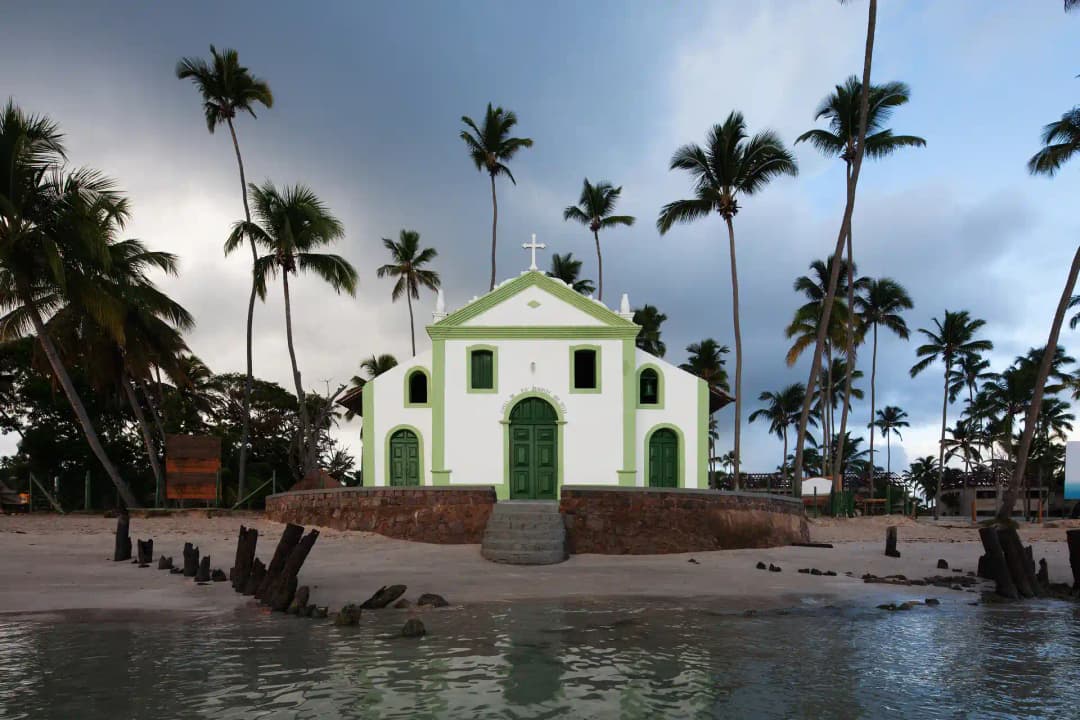
An hour from Muro Alto, in the neighboring municipality of Tamandaré, is Praia dos Carneiros.
The palm trees reach the sand, the water is clear, and the small Church of São Benedito faces the sea. The catamaran tour on the Formoso river is one of the most popular.
Ilha de Santo Aleixo: boat transfer
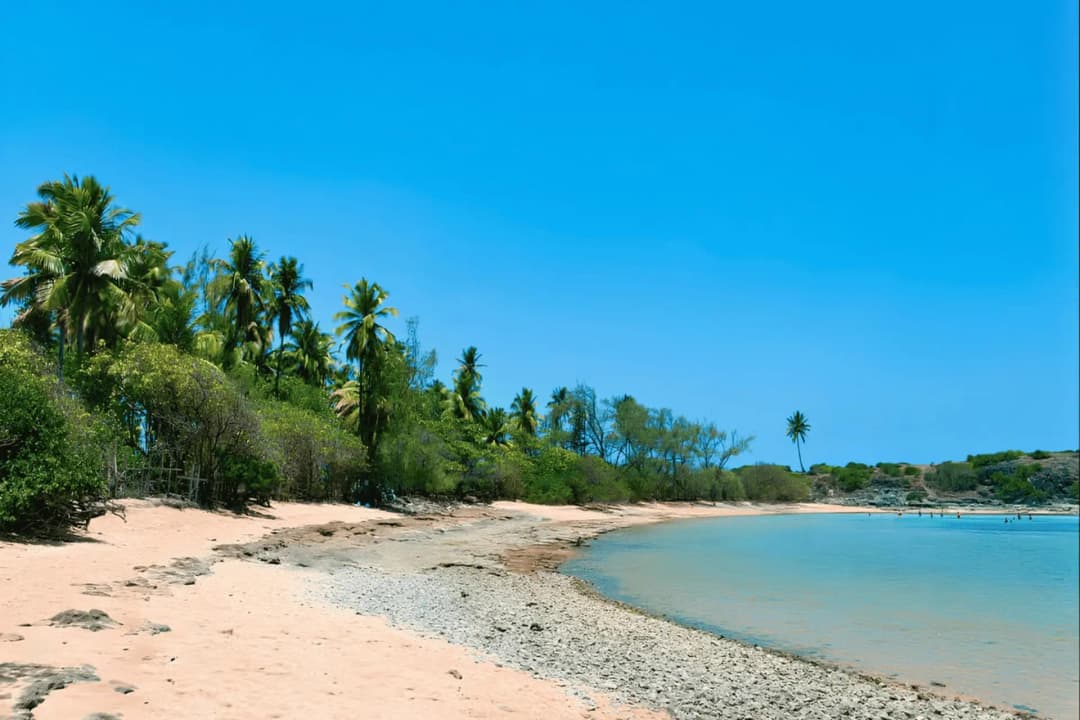
Ilha de Santo Aleixo is off the southern coast of Pernambuco, accessible by boat. If you don’t want to arrange transport yourself, this tour departs from Recife with a boat transfer from Sirinhaém:
Maragogi: natural pools in Alagoas

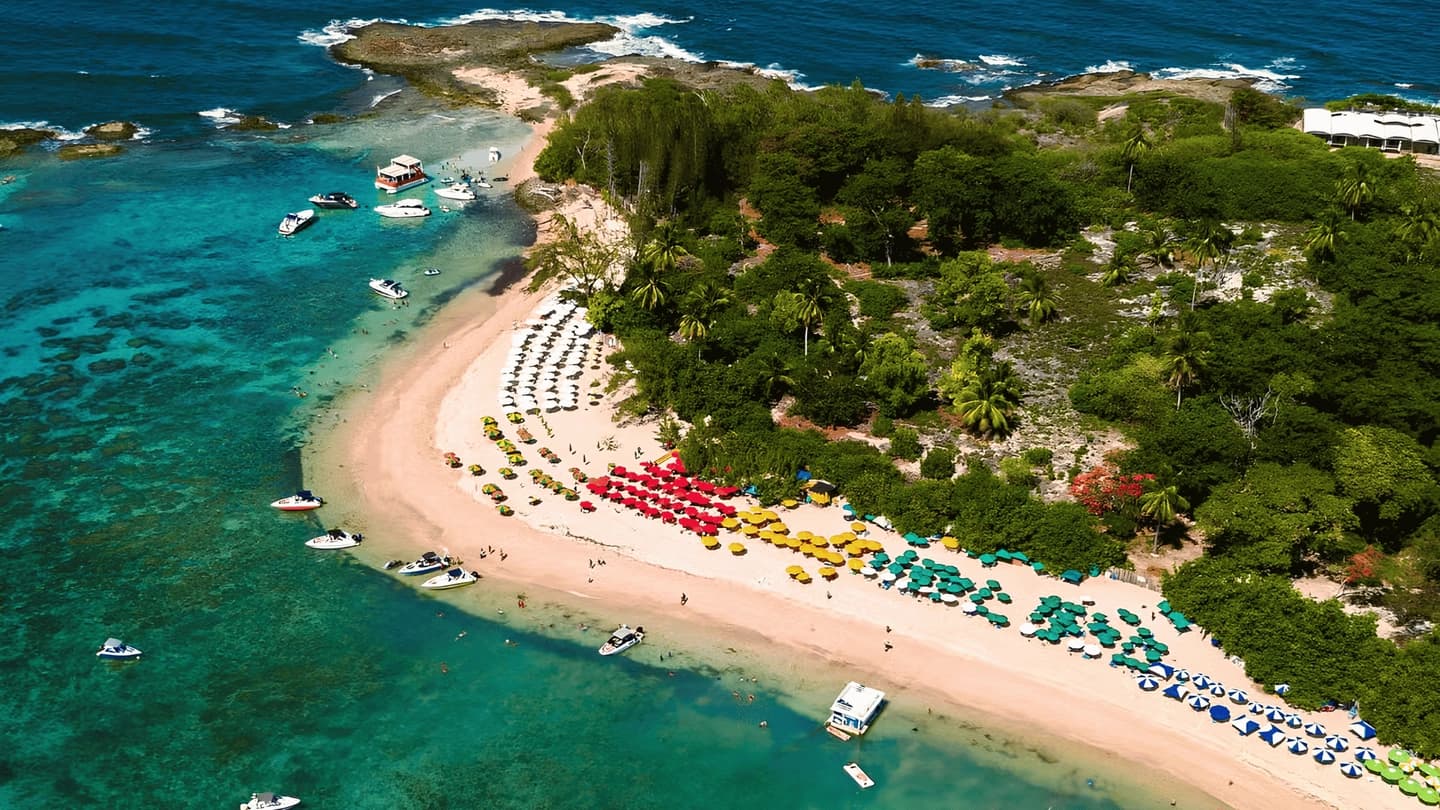
Maragogi
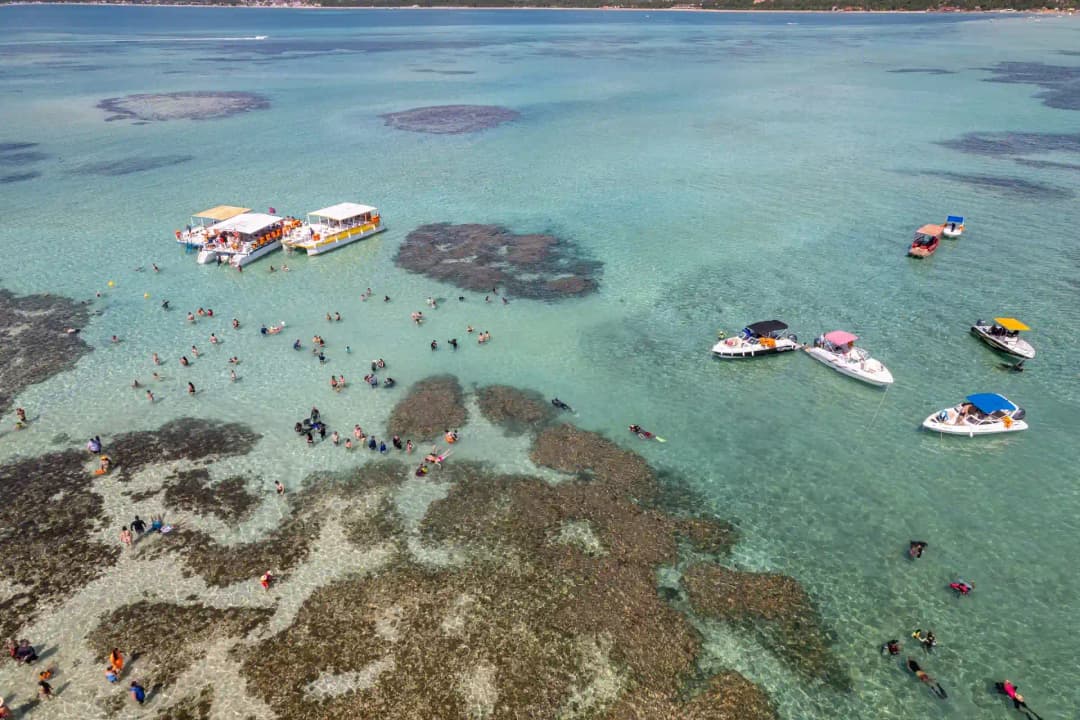
in the neighboring state ofAlagoas is about one hour and forty minutes from Muro Alto, so it’s worth leaving early.On the Coral Coast there are natural pools with transparent waters reached by boat.
For a full day without driving, this tour departs from Recife:
Which Beach Suits You?

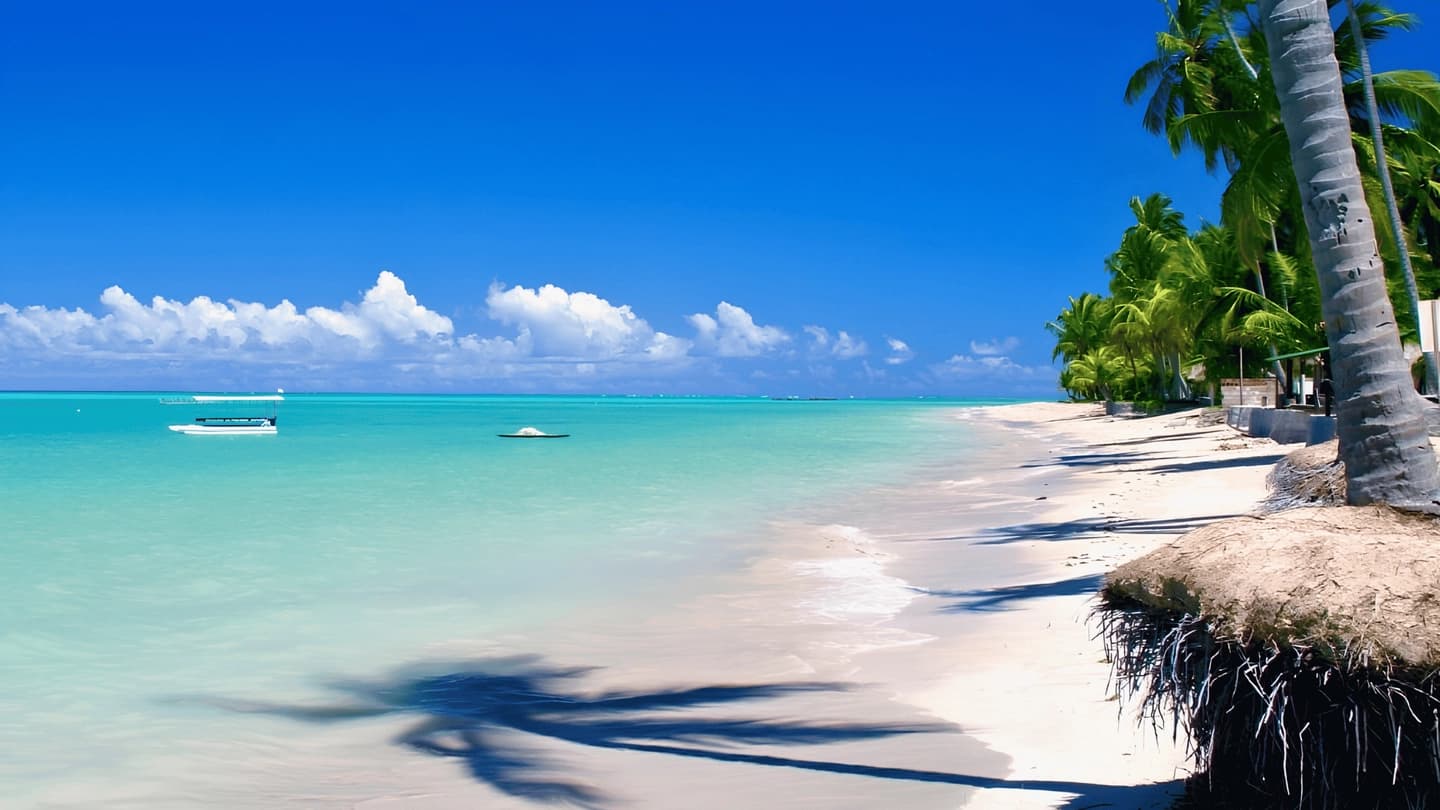
Some travelers seek a wave-free pool, others prefer high waves. This section helps you choose among Porto de Galinhas beaches according to your profile.
If you travel with children
, chooseMuro Alto or Serrambi . Muro Alto has calm water with no waves, offering kayaking and stand-up paddleboarding, while Serrambi alternates calm stretches with natural pools.If you travel as a couple
, choose the sunset atPontal de Maracaípe or the calm of Serrambi . Pontal also has mangroves and jangada tours, and Serrambi tends to be less crowded.If you travel with friends
and want lively scenes, stay in the Vila , with bars, shops, restaurants, and live music at night.If you seek surfing
, chooseCupe and Borete or Maracaípe . The waves are consistent, and Maracaípe has surf schools for beginners.If you prefer nature and tranquility
, chooseEnseadinha or Pontal de Maracaípe , with mangroves, trails, and kayak or jangada tours.Frequently Asked Questions
What is the best time to visit Porto de Galinhas?
From September to March, when there is less rain.
The high season runs from December to March, and the water temperature stays between twenty-six and twenty-eight degrees Celsius year-round. The natural pools depend on low tide, not the season. How do I get to Porto de Galinhas?
It is about fifty kilometers from Recife, roughly an hour by car.
The nearest airport is Recife’s, with buses, ride apps, and private transfers available. Car traffic is restricted in the Vila center. What are the most famous beaches in Porto de Galinhas?
Muro Alto, the Vila, Cupe, and Maracaípe.
Muro Alto and the Vila stand out for their natural pools, and Cupe and Maracaípe for surfing. Pontal de Maracaípe is popular for its sunsets. Which Porto de Galinhas beach has the calmest sea?
Muro Alto, due to the reef barrier that keeps the water wave-free.
Serrambi and Enseadinha also have calmer waters, while Maracaípe, Cupe, and Borete have strong waves. What is the distance between Porto de Galinhas and Muro Alto?
Muro Alto is about nine kilometers north of the Vila.
It’s a short trip by car, taxi, or ride app, and several resorts face the beach. What is the distance between Maracaípe and Porto de Galinhas?
Maracaípe is about three kilometers south of the Vila.
You can go by car, taxi, or ride app, or walk along the shore to the kiosks, about two kilometers. Where to stay in Porto de Galinhas?
It depends on your itinerary: Muro Alto for calm seas, the Vila to be close to everything, and Maracaípe for surfing.
Cupe has the largest hotel selection, and Serrambi is the quietest option. Is it better to stay in Recife or Porto de Galinhas?
To enjoy the beaches, it’s better to stay near Porto de Galinhas.
Recife works if you want to combine city life and can do day trips, but jangada tours depend on tide times. Is Praia dos Carneiros in Porto de Galinhas?
No, it’s in Tamandaré, a neighboring municipality.
The tour is usually a day trip, about an hour from Muro Alto. Experience the beaches of Porto de Galinhas in tune with the tide
In Porto de Galinhas, the day revolves around the tide. When it goes down, the Vila reef becomes a natural pool, and the rest of the day is free for other beaches.
A buggy travels from end to end through Muro Alto, Cupe, the Vila, and Maracaípe, with stops for swimming: four beaches, four different seas, all in one day.
If you stay longer, tours can include the little church at Carneiros, Santo Aleixo island, or the pools of Maragogi.
At
Tur.com you can find jangada tours, diving, and excursions departing from Recife to plan your trip to the beaches of Porto de Galinhas. Beaches of Porto de Galinhas Between Reefs and Waves