
The Recoleta Cemetery is not just a burial ground, but a fascinating open-air museum that holds the secrets of Argentina's.
history. A place surrounded by many legends, the cemetery is a spot you can't miss if you're in Buenos Aires..
At Tur.com, we put this together in case you want to visit one of the most beautiful cemeteries in the world. Discover below:
- Recoleta Cemetery
- Where is Recoleta Cemetery and How to Get There?
- Tickets to Recoleta Cemetery
- What to See at Recoleta Cemetery
- Frequently Asked Questions
Recoleta Cemetery
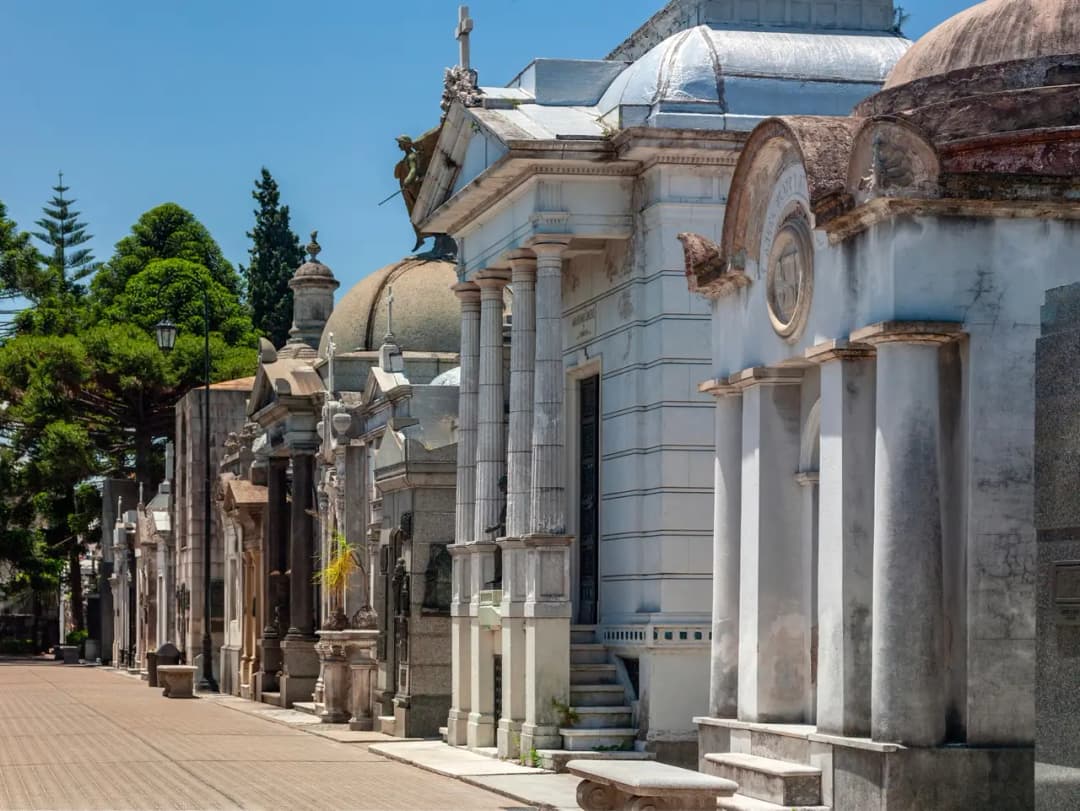
The Recoleta Cemetery is one of the most visited places in Buenos Aires and one of the most renowned cemeteries worldwide for its historical, architectural, and cultural value.
Opened in 1822, it houses the mausoleums of presidents, military figures, writers, scientists, and other figures who shaped Argentina's history..
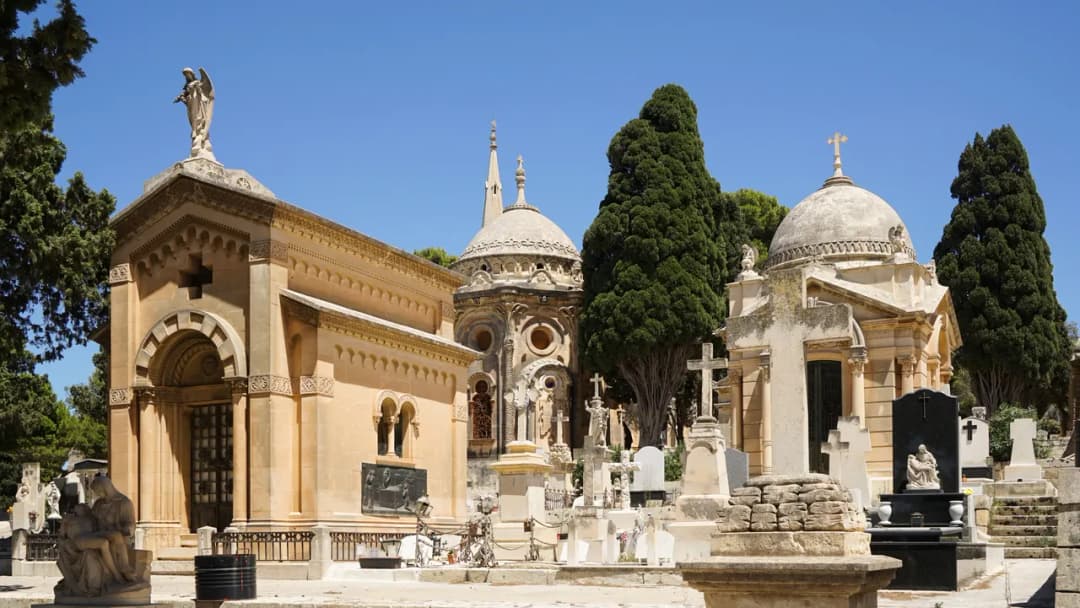
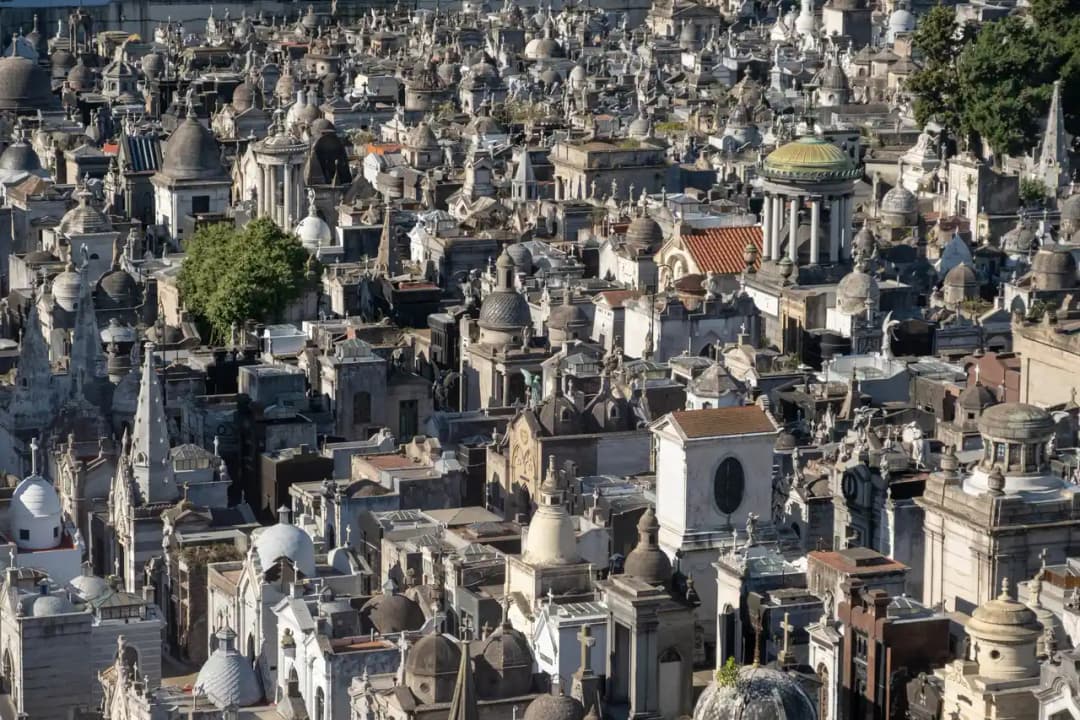
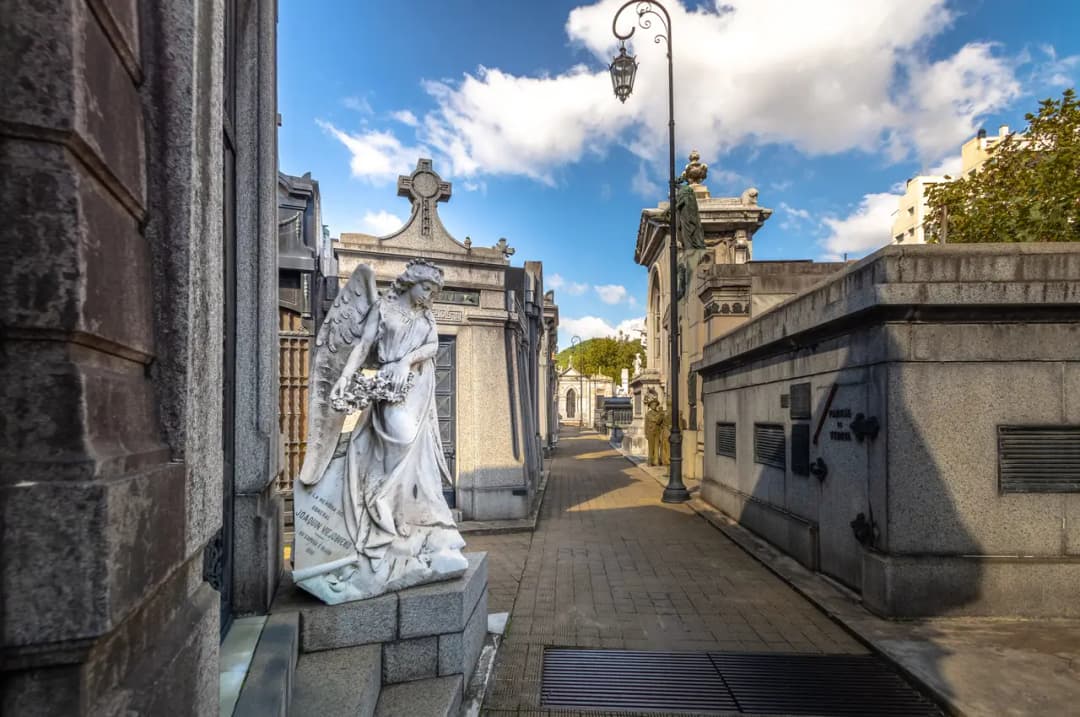
More than a cemetery, the site is considered a true open-air museum. Its streets are lined with mausoleums, vaults, and sculptures built in styles such as Neoclassical, Art Deco, and Art Nouveau..
Among its most visited monuments is the mausoleum of Eva Perón,one of the main points of interest for those touring the cemetery.
Important personalities from Argentine history also rest here, making the place a space to learn about the country's political, cultural, and social past..
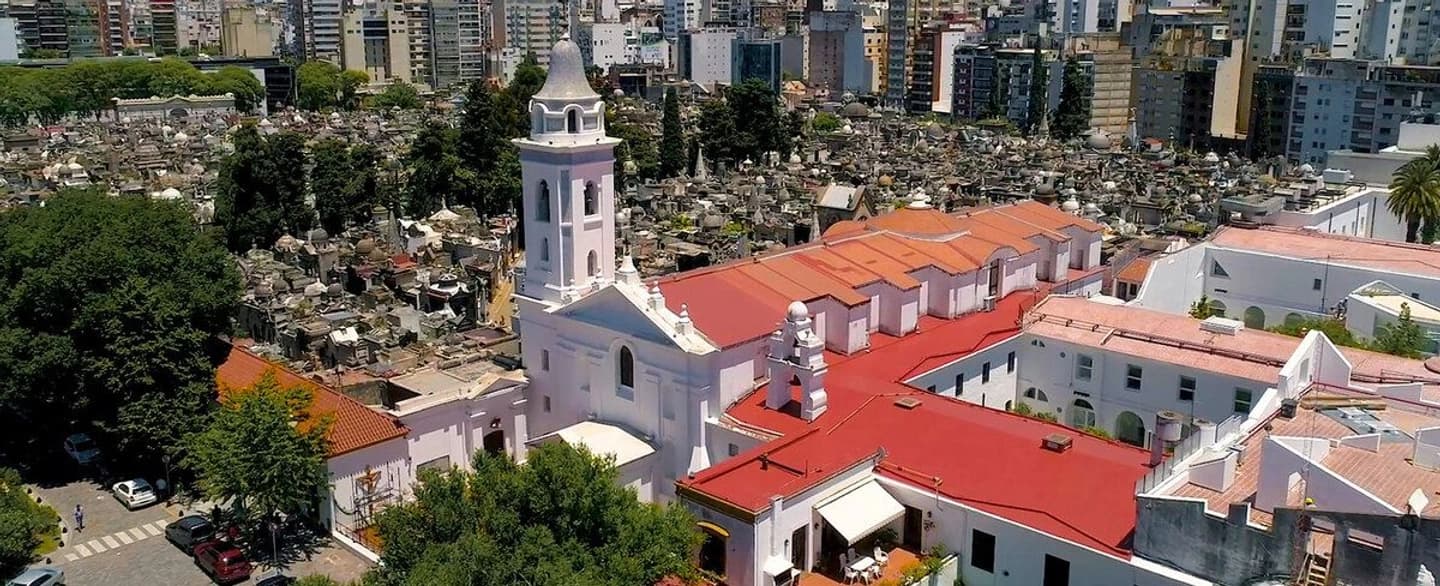
Located in the Recoleta neighborhood,the Recoleta Cemetery is a key attraction in the city of Buenos Aires..
Nearby, you can find many more sights to discover such as plazas, museums, cafés, and historic buildings to complement your visit.


Where is Recoleta Cemetery and How to Get There?
The Recoleta Cemetery is located in the Recoleta neighborhood,one of the most elegant and visited areas of Buenos Aires..
From downtown Buenos Aires, you can reach it by taxi or ride-sharing apps in about 10 to 15 minutes.
You can also take the subway (metro),using Line H to the Las Heras station,which is about a 10-minute walk from the cemetery.
Another option is the bus,with several lines operating nearby such as 17, 61, 67, 92, 93, 110, 124, and 130,all stopping close to the Recoleta Cemetery..
📸You might be interested in: What to See in Buenos Aires: Neighborhoods, Tango, and History
Tickets to Recoleta Cemetery
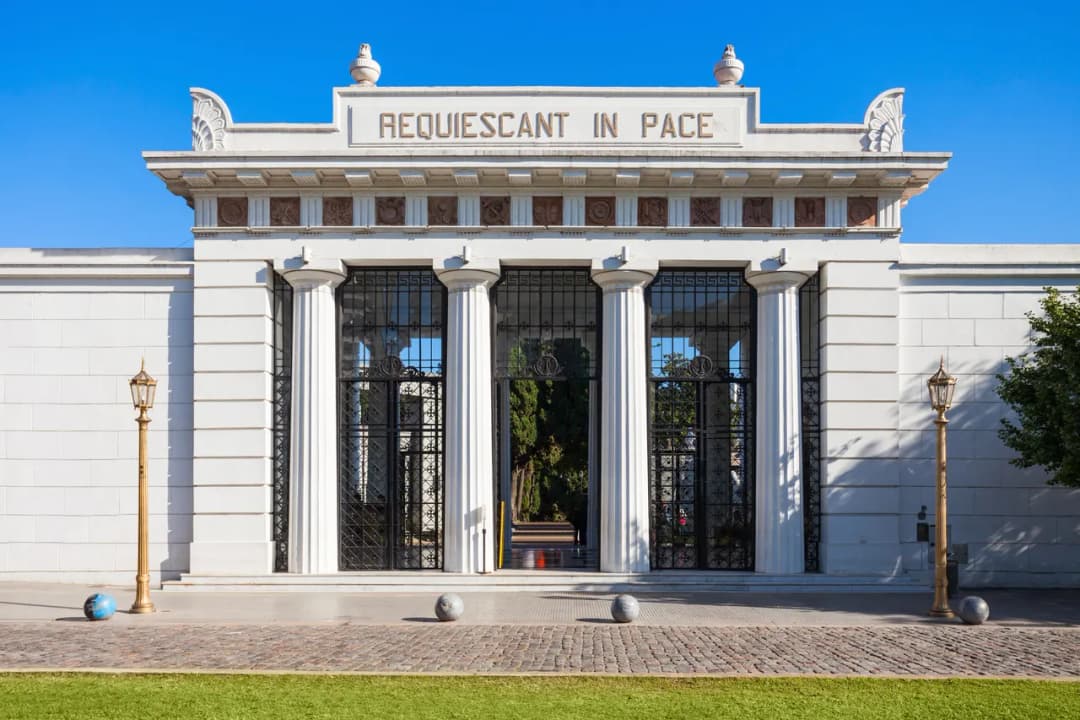
Admission is free for Argentine residents,who must prove their residency with an identity document upon entry. Foreign tourists must purchase a ticket to access the grounds.
Tickets for foreign visitors can be bought in advance through the official Buenos Aires City system or directly at the cemetery entrance.
Prices may change periodically, but to give you an idea, the cost can range from 16,000 to 21,000 ARS,or12 to 16 USD,with payment accepted in cash or by card at the cemetery entrance.
What to See at Recoleta Cemetery
The cemetery covers approximately 5.5 hectares. It contains around 4,800 vaults and mausoleums, requiring at least a couple of hours for a detailed tour. Here are some must-visit spots:
Eva Perón's Tomb
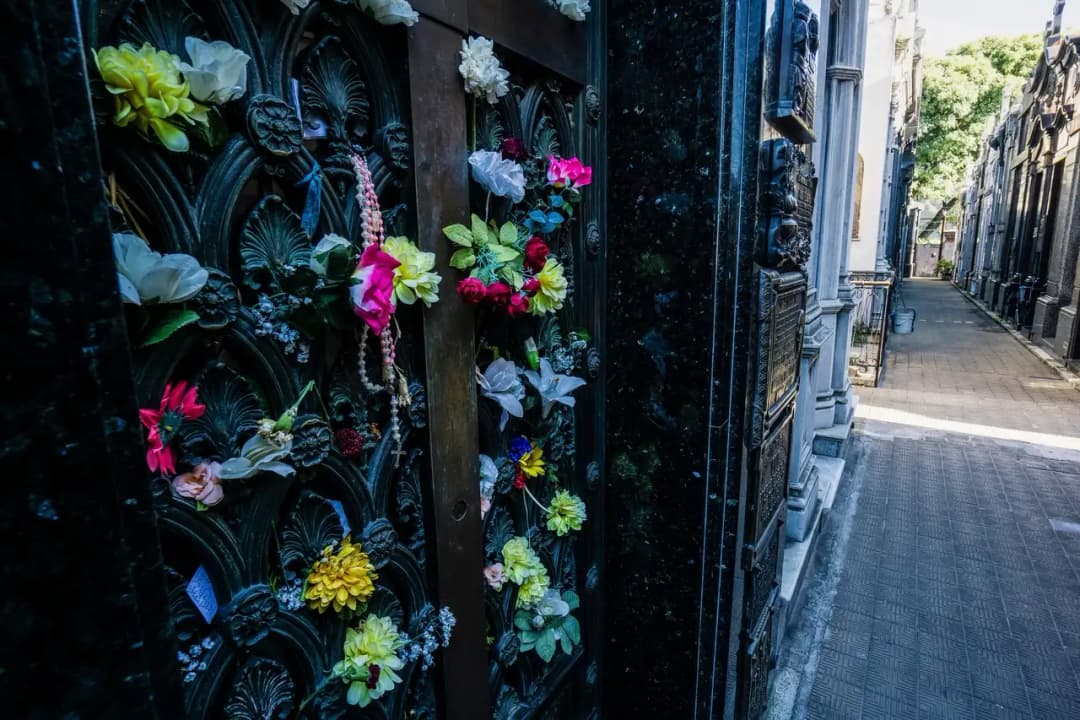
One of the most visited places in Recoleta Cemetery is Eva Perón's tomb,popularly known as Evita.
Located in the Duarte family vault,it receives visitors from all over the world daily who come to see one of the most emblematic sites in Argentine history.
Fresh flowers and commemorative plaques honoring the former first lady are commonly found there.
Although its design is more modest than other mausoleums, the symbolic and political significance makes it a must-see stop.
Luis Federico Leloir's Mausoleum
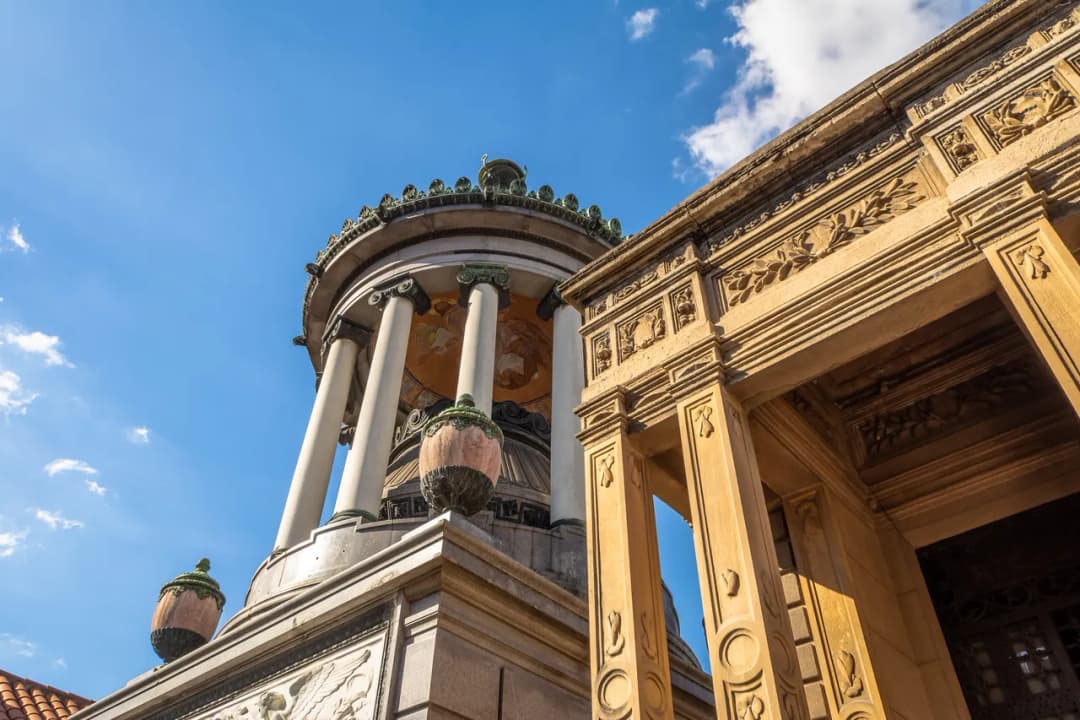
The mausoleum of Luis Federico Leloir honors the Argentine scientist who won the Nobel Prize in Chemistry in 1970 for his research on carbohydrates.
This mausoleum, with its impressive dome and classical design, stands out among the others for its size and history.
It is a key stop on cemetery tours where guides explain the fascinating stories behind this site.
His tomb is part of the route for those wanting to learn about personalities who contributed to the development of science in Argentina, representing recognition of one of the country's most important researchers.
Rufina Cambaceres' Vault
The vault of Rufina Cambaceres is one of the most famous in the cemetery due to the legend surrounding it.According to popular tradition, Rufina was mistakenly declared dead at 19 and supposedly woke up after being buried.
Although there is no evidence to confirm this story, the tale has made her tomb one of the most visited. The sculpture adorning the vault shows a young woman holding the door as if about to step out.
Domingo Faustino Sarmiento's Mausoleum
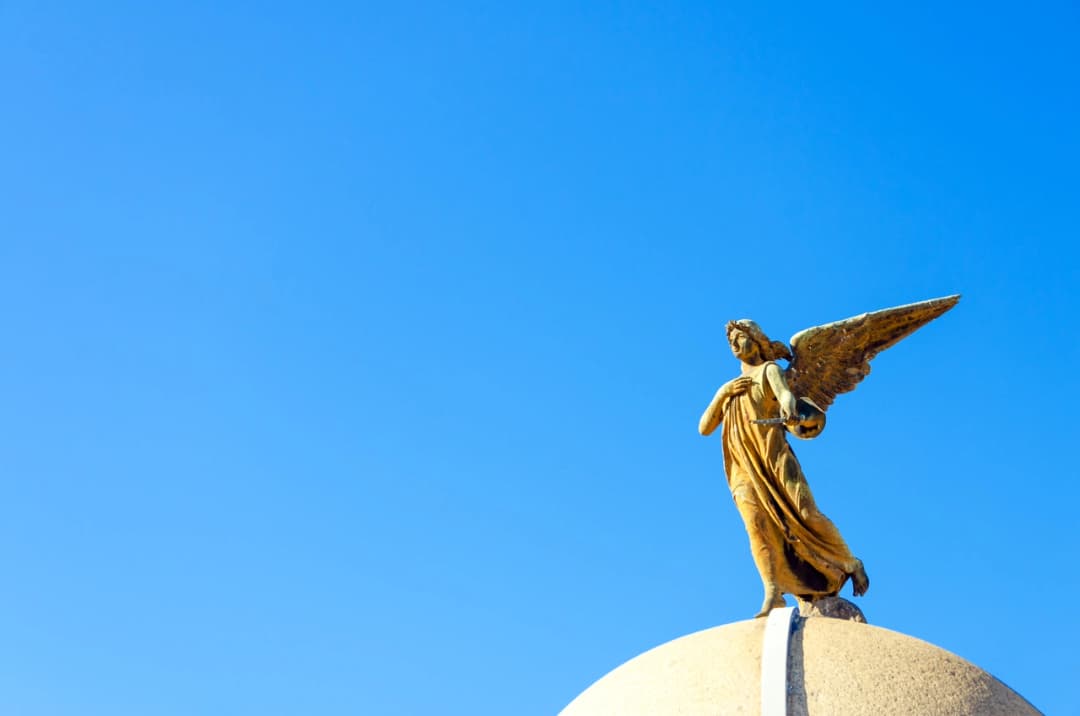
The mausoleum of Domingo Faustino Sarmiento stands out for its design and the historical significance of the man who was president of Argentina from 1868 to 1874.
Sarmiento promoted important educational reforms and is considered one of the country's most influential figures.
His monument was designed following some of his own instructions and is topped by a bronze condor, symbolizing the Andes mountain range..
Bartolomé Mitre's Vault
The vault of Bartolomé Mitre belongs to the military leader, historian, and former president who played a key role in organizing the Argentine state.
The monument is notable for its monumental architecture and surrounding sculptures, making it one of the most imposing structures in the cemetery..
Raúl Alfonsín's Mausoleum
The mausoleum of Raúl Alfonsín is one of the most visited due to his importance in the country's recent history.
Alfonsín was the first democratically elected president after the return of democracy in 1983, so his tomb often attracts visitors interested in learning more about this period of Argentine history.
These mausoleums allow visitors to explore different stages of Argentina's history,from the development of science and education to politics and culture.
Each preserves architectural and artistic details that make the Recoleta Cemetery one of the most interesting places to discover Buenos Aires' historical heritage..
Frequently Asked Questions about Recoleta Cemetery
How much time is needed to tour Recoleta Cemetery?
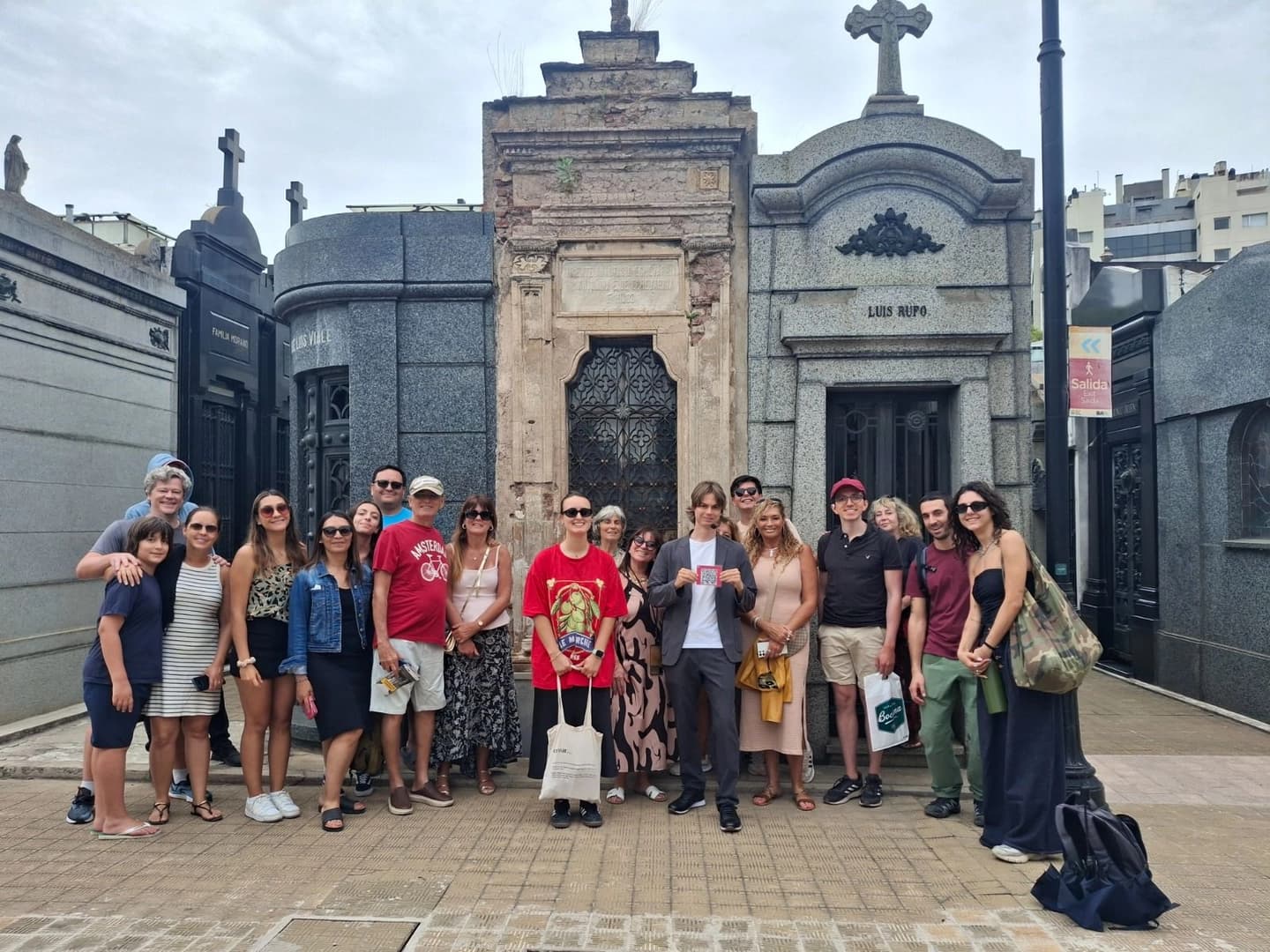
Most visitors spend between one and two hours to see the main mausoleums and monuments of Recoleta Cemetery.
However, if you want to learn more about its history, architecture, and the personalities resting there, you may need up to three hours, especially if you take a guided tour.
Is it worth taking a guided tour?
Yes, it is ideal as it allows you to learn the history of the mausoleums, the legends surrounding some vaults, and the importance of the historical figures buried there.
Additionally, guides often share curiosities and architectural details that are often missed during a self-guided visit.
What is the best time to visit the cemetery?
We recommend visiting the cemetery in the morning when there are fewer tourists and temperatures are more pleasant, especially in summer. Also, the natural light helps you better appreciate the cemetery's architecture and sculptures.
Is photography allowed inside Recoleta Cemetery?
Yes. Photography is permitted, so many visitors take the opportunity to capture the architecture, sculptures, and historic monuments.
It is recommended to maintain a respectful attitude, as the site is still an active cemetery.
What other places can be visited near Recoleta Cemetery?
Recoleta Cemetery is located in one of Buenos Aires' most traditional neighborhoods.
Within a short walk, you can visit the Basilica of Pilar,the Recoleta Cultural Center,, Plaza Francia,the National Museum of Fine Arts, and the Floralis Genérica.There are also cafés, restaurants, and artisan fairs that complement your neighborhood tour.
Recoleta Cemetery: A Journey Through Argentina's History
Visiting the Recoleta Cemetery is much more than touring a historic site. Its mausoleums, sculptures, and illustrious figures allow you to discover an important part of Argentina's history while exploring one of the world's most renowned cemeteries.
We hope you enjoy your visit to this burial ground, and remember that at Tur.com, we have hundreds of activities and experiences throughout Buenos Aires, Argentina, Latin America, and beyond.Discover what awaits you.