
Highlights
- The towns near Cartagena in this guide can be visited in half a day, a day trip, or a weekend.
- The most comfortable time to go is from December to April, because it rains less.
- You reach them by road, and to Bocachica by boat from La Bodeguita pier.
- For several destinations, there are tours from Cartagena with transportation, and on Tur.com you can see them.
In the towns near Cartagena you can bathe in the crater of a mud volcano, meet a community that preserves its own language, and walk through colonial streets along the Magdalena River.
Some are just minutes from the city, where you can row among mangroves or tour a fort.
Others are farther away, where you hear flutes, watch hammocks being woven, and walk through a dry forest to observe monkeys and birds.
That’s why we chose ten towns near Cartagena with varied plans for every type of traveler.
In this guide by Tur.com we organize them by travel time so you can plan your getaway.
- Cartagena and its surroundings
- Towns for half a day
- Towns for a day trip
- Towns for a weekend
- Which town suits you?
- Frequently asked questions about the towns near Cartagena
- Live your getaway in the towns near Cartagena
Cartagena and its surroundings
Cartagena de Indias is the capital of the Bolívardepartment, and all the towns in this guide are within it.
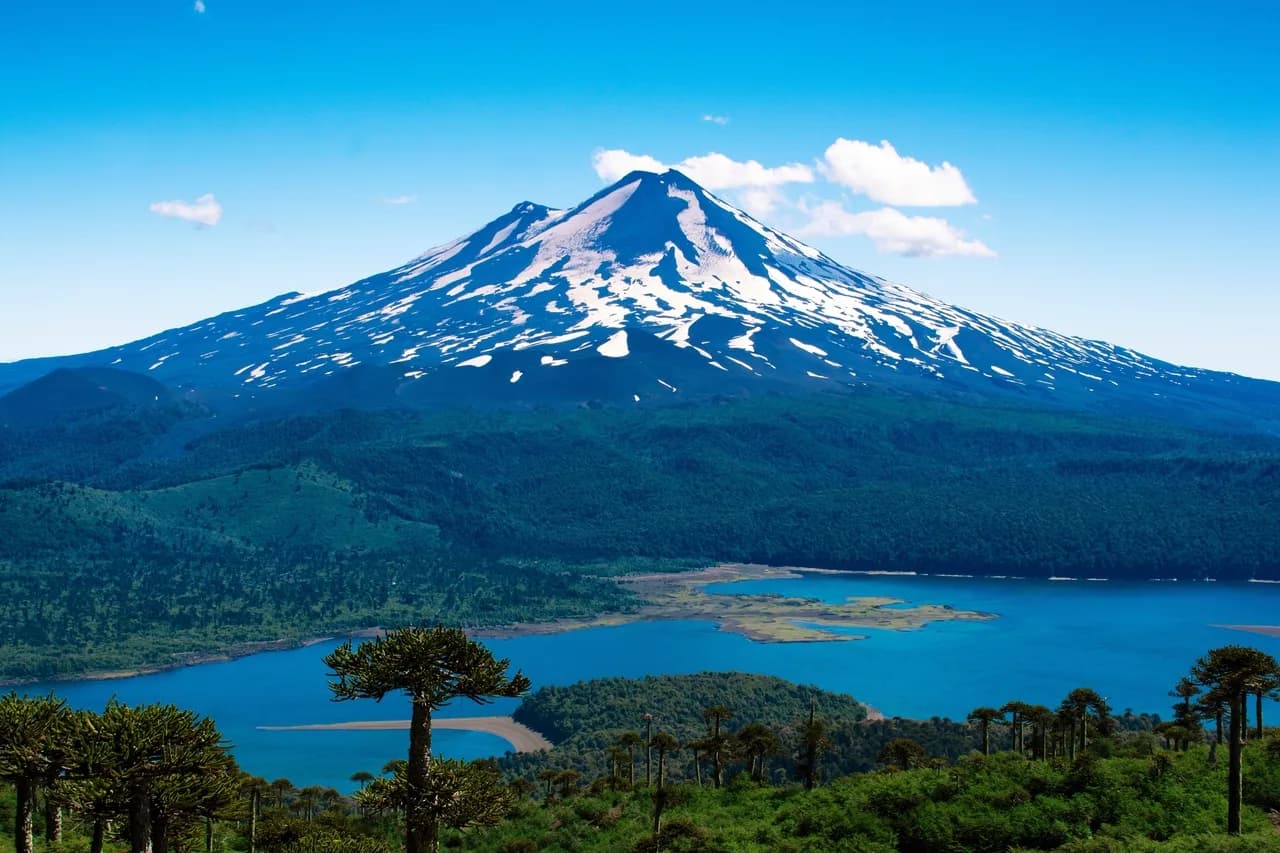
To the north are the Galerazamba salt flats, ponds where sea salt is extracted and which, depending on the season, appear pink, and the Totumo Volcano, where you can bathe in mud.
To the south and east are the Canal del Dique, a canal that connects the Magdalena River with Cartagena Bay, and the Montes de María, a low mountain area where you can hike, weave hammocks, and play flutes.
If you also want to explore the city, check out the guide on things to do in Cartagena de Indias.
The ten towns in this guide, in the order they appear:
- Bocachica
- La Boquilla
- Turbaco
- Santa Catalina and Galerazamba
- San Basilio de Palenque
- María La Baja
- San Jacinto
- San Juan Nepomuceno
- Mompox
- Magangué
Towns for half a day
These three towns are just minutes from downtown Cartagena and fit into a half-day.
There is a colonial fort on an island, a beach with mangroves, and a botanical garden.
Bocachica: the fort reached by boat
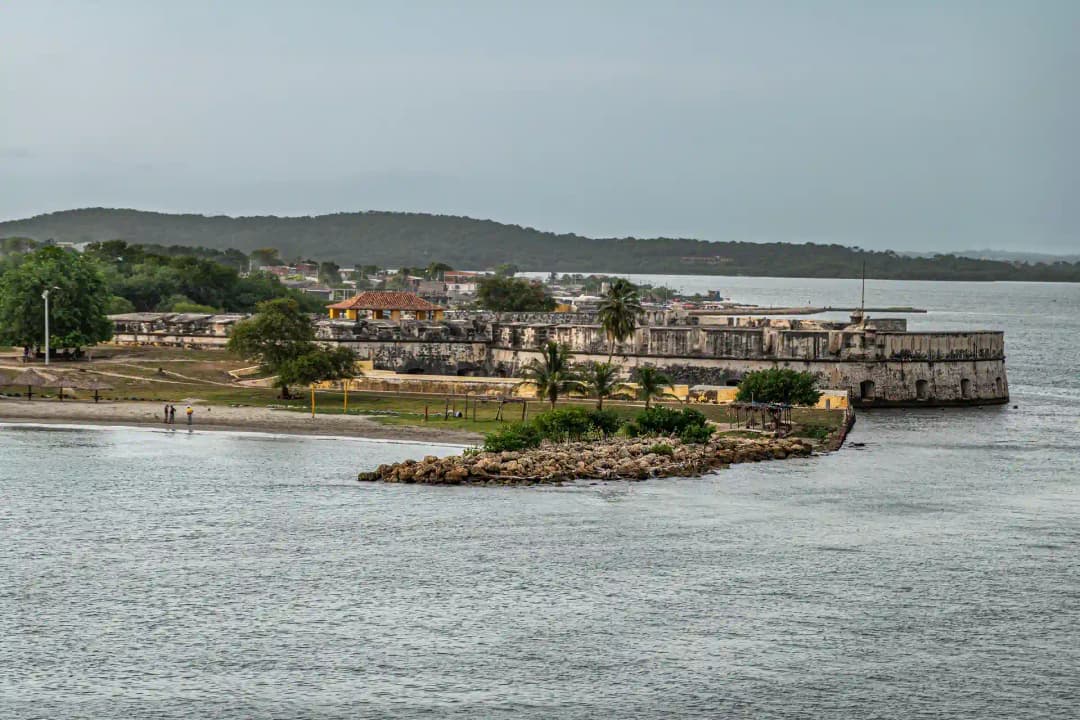
Bocachica is a fishing community on the island of Tierra Bomba, about fifteen to twenty minutes by boat from La Bodeguita pier.
Here you can tour the San Fernando Fort, built in the eighteenth century to defend Cartagena from sea attacks.
Inside the fort, the Museum of Trades shows, with the help of the community, how artisanal fishing, local cooking, and canoe building are lived.
Some groups from the town offer guided tours and food, so the visit can be extended to fill the day.
La Boquilla: mangroves and artisanal fishing
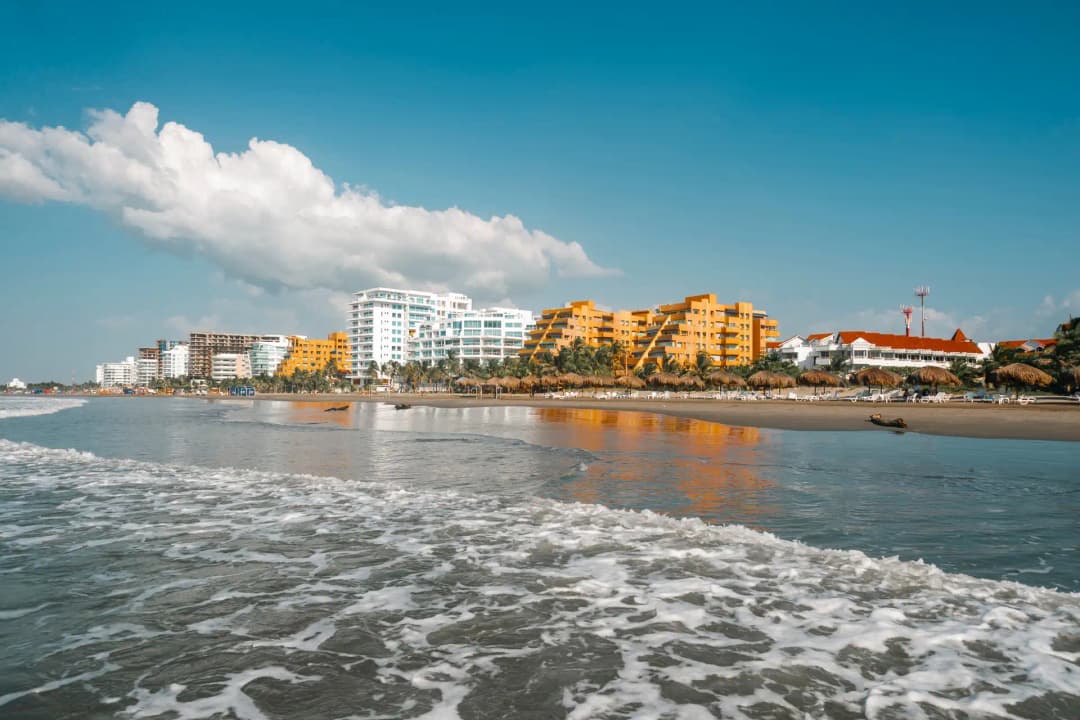
La Boquilla is a fishing district at the northern tip of Cartagena, twenty minutes by car from downtown.
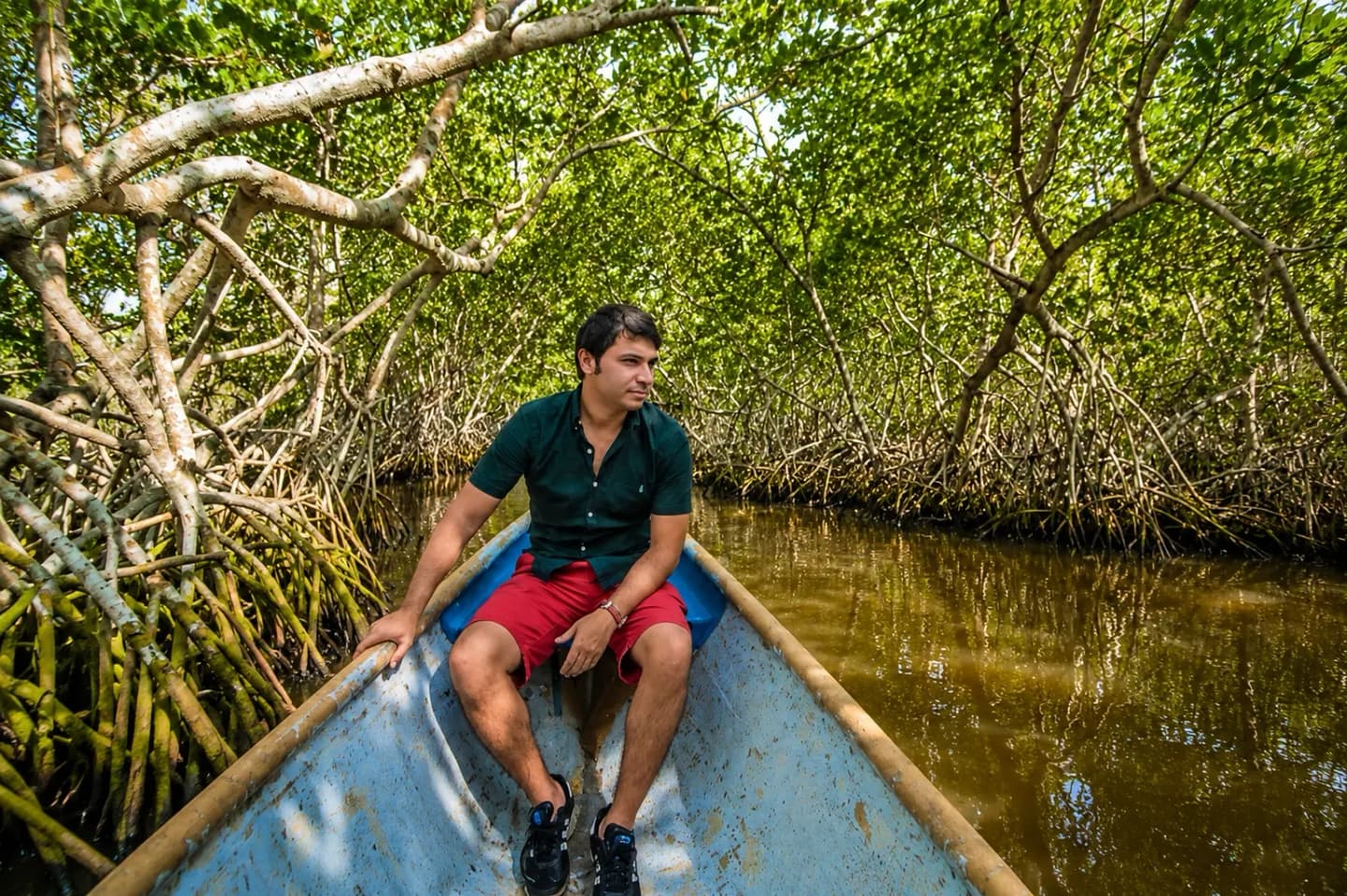
Here you can spend the morning on the beach and the afternoon paddling among mangroves.
Canoe tours through the Ciénaga de La Virgen, a coastal lagoon, allow you to see the mangroves up close, and some include planting mangrove seedlings.
For lunch, beach restaurants serve fresh fish with coconut rice and patacones, which are fried green plantain slices.
If you prefer more action, there are kitesurfing schools, a board sport powered by a kite.
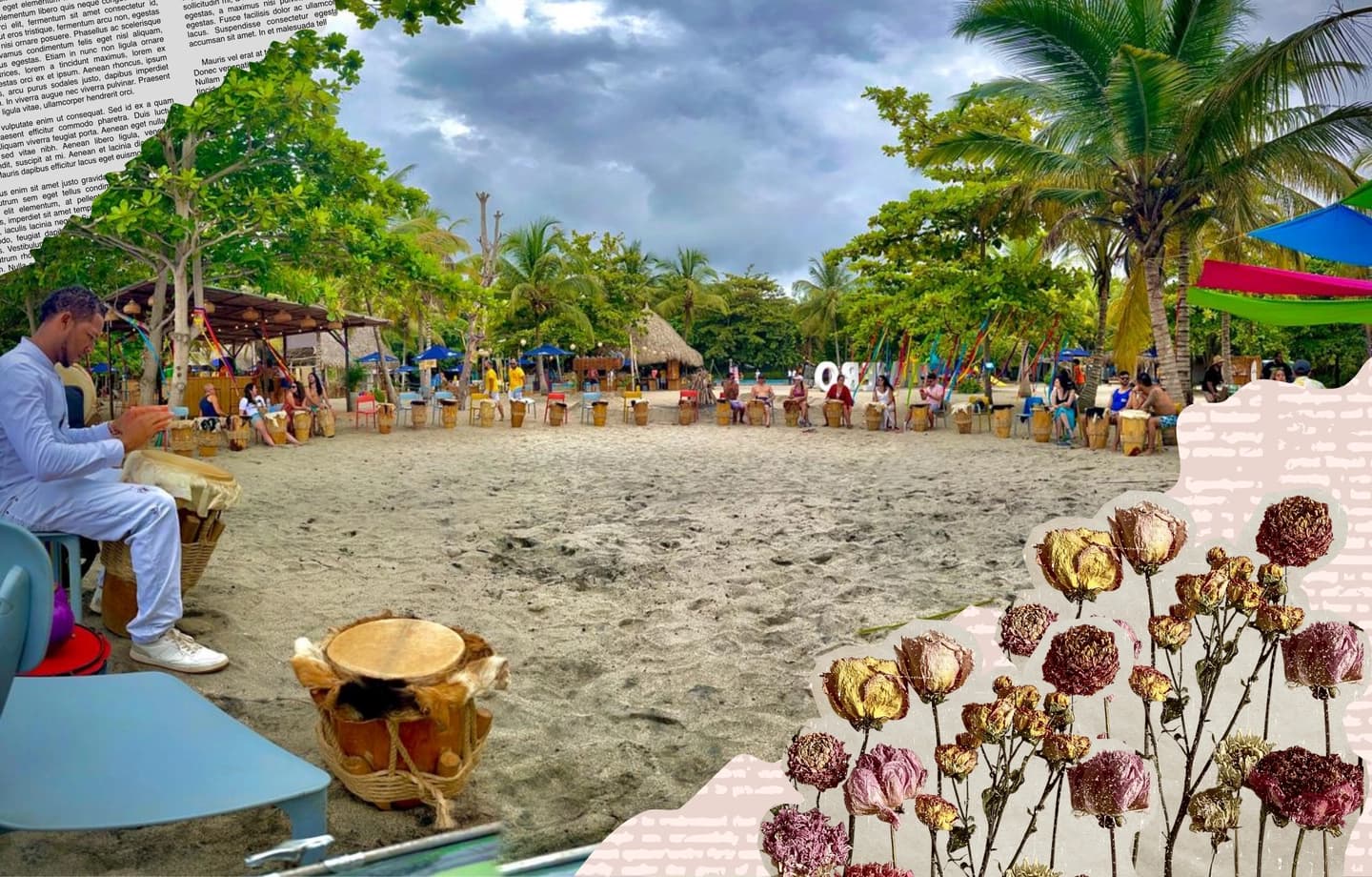
At sunset, local musicians teach Afro-Caribbean percussion rhythms by the sea.
To explore La Boquilla with transportation from Cartagena, there is a canoe tour through the mangroves and a percussion workshop.


Turbaco: botanical garden and fried food tables
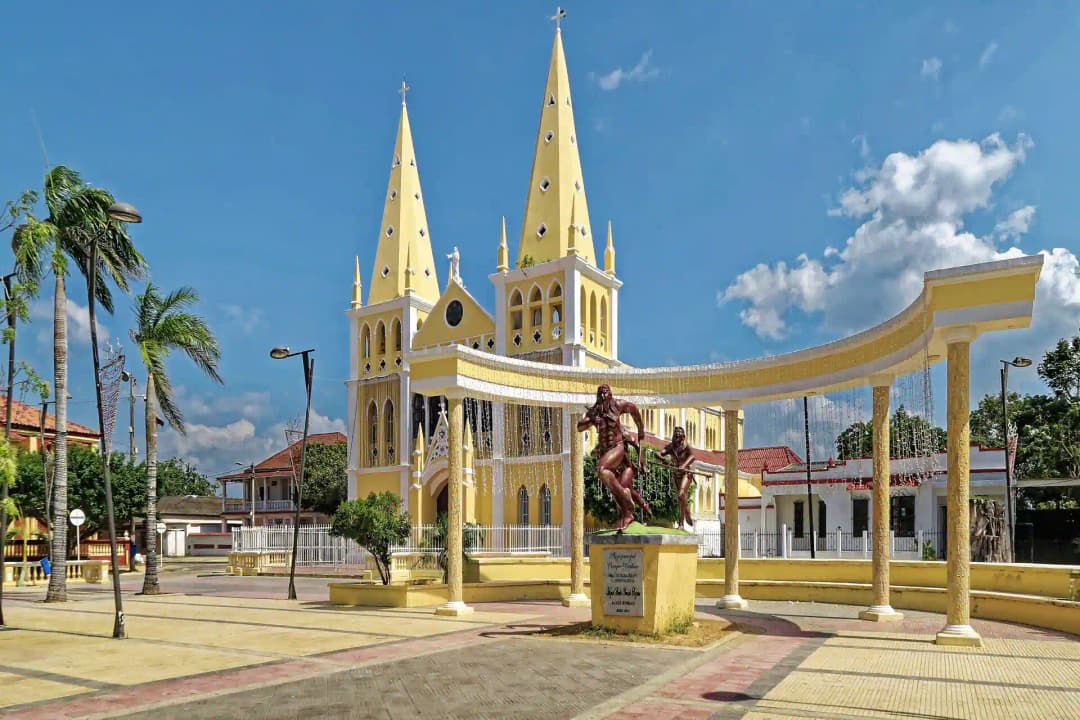
Turbaco is about ten kilometers from Cartagena, so close that the two municipalities almost merge.
Here you can walk among more than three hundred plant species in the Guillermo Piñeres Botanical Garden.
If you prefer to move, there are trails for mountain biking.
For food, the fried food tables serve egg arepas, butifarra, and carimañolas, which are fried yuca snacks filled with meat.
In December, the festivities of Saint Catherine of Alexandria, the town’s patron saint, fill the streets with horseback parades and music bands.
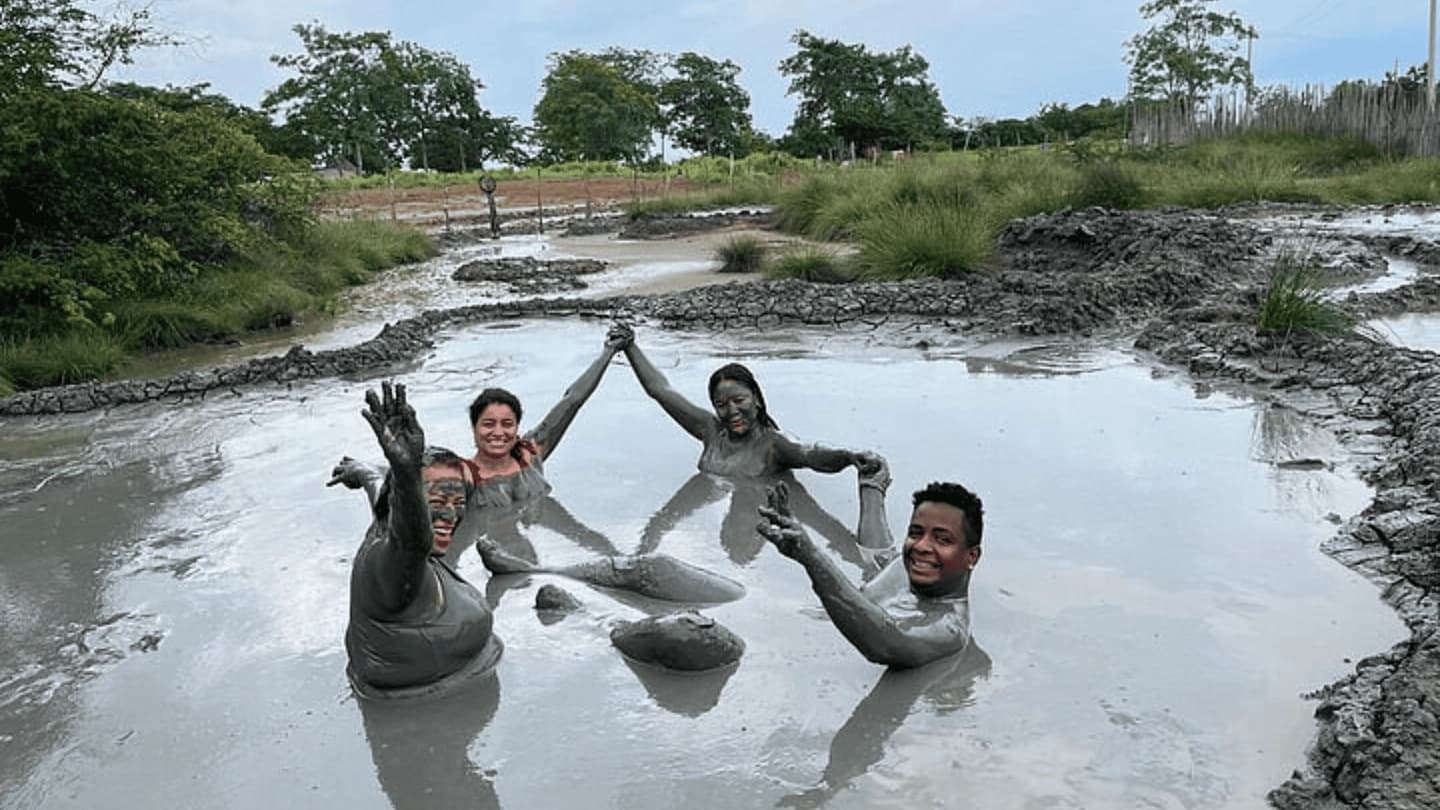
Another plan is to relax in mud pools and visit the Yurbaco Museum.
To combine the town with the mud pools, there is a day trip from Cartagena.

Towns for a day trip
These five towns require a day tripbecause from Cartagena the journey takes about an hour or more one way.
There is a mud volcano, a community with its own language, flute and drum music, and a dry forest with monkeys and birds.
Santa Catalina and Galerazamba: the mud volcano and the salt flats
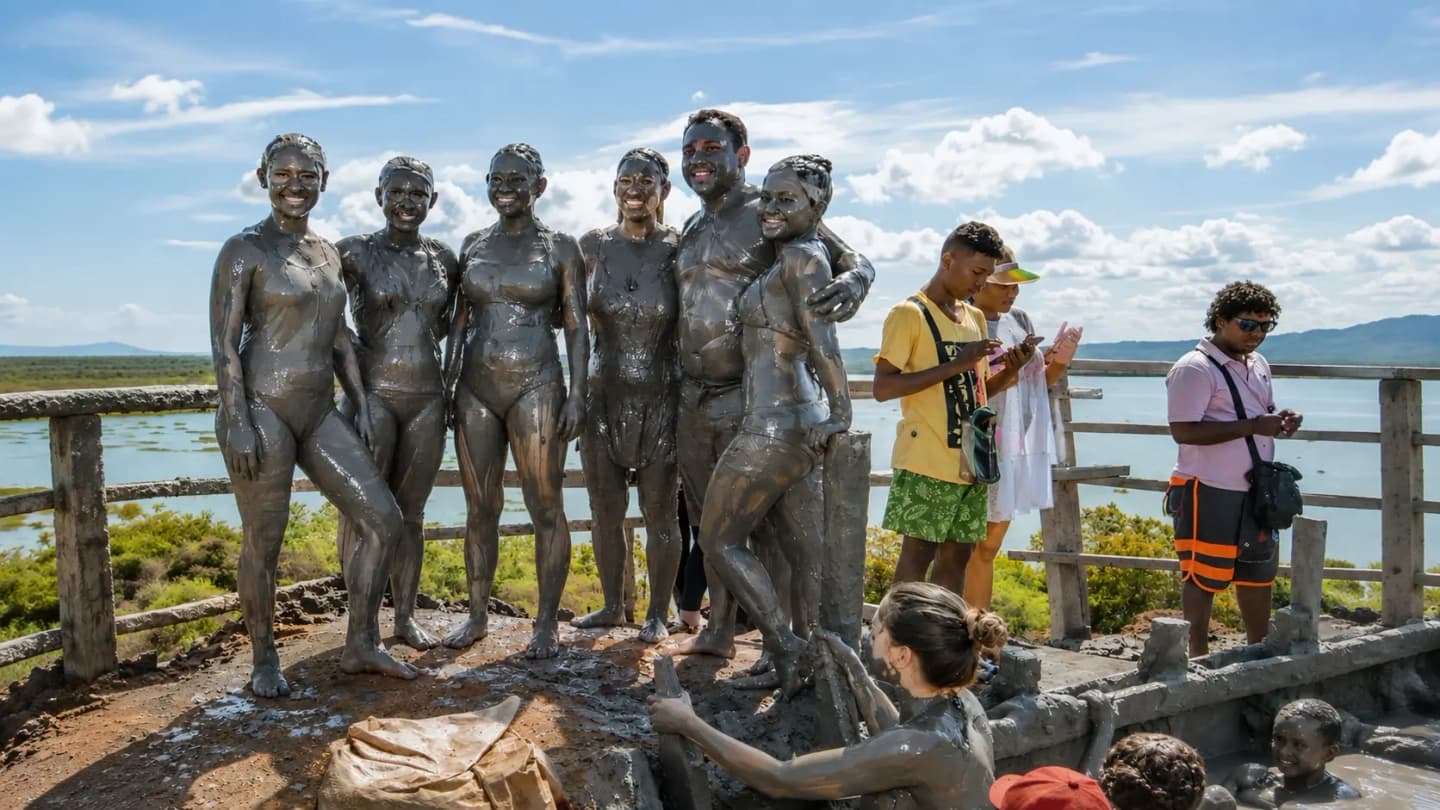
In Santa Catalina you can bathe in the crater of the Totumo Volcano, filled with thick, warm mud.
It is about an hour from Cartagena, and you climb a staircase to the top.
Afterwards, you wash off in a nearby lagoon.
Twenty minutes away is Galerazamba, where you see the salt flats, which turn pink depending on the season, and the Ethnoindustry Museum, which tells how salt is extracted ancestrally.
To visit the volcano and the salt flats with transportation from Cartagena, there is a day trip that combines both.

San Basilio de Palenque: language, drums, and sweets
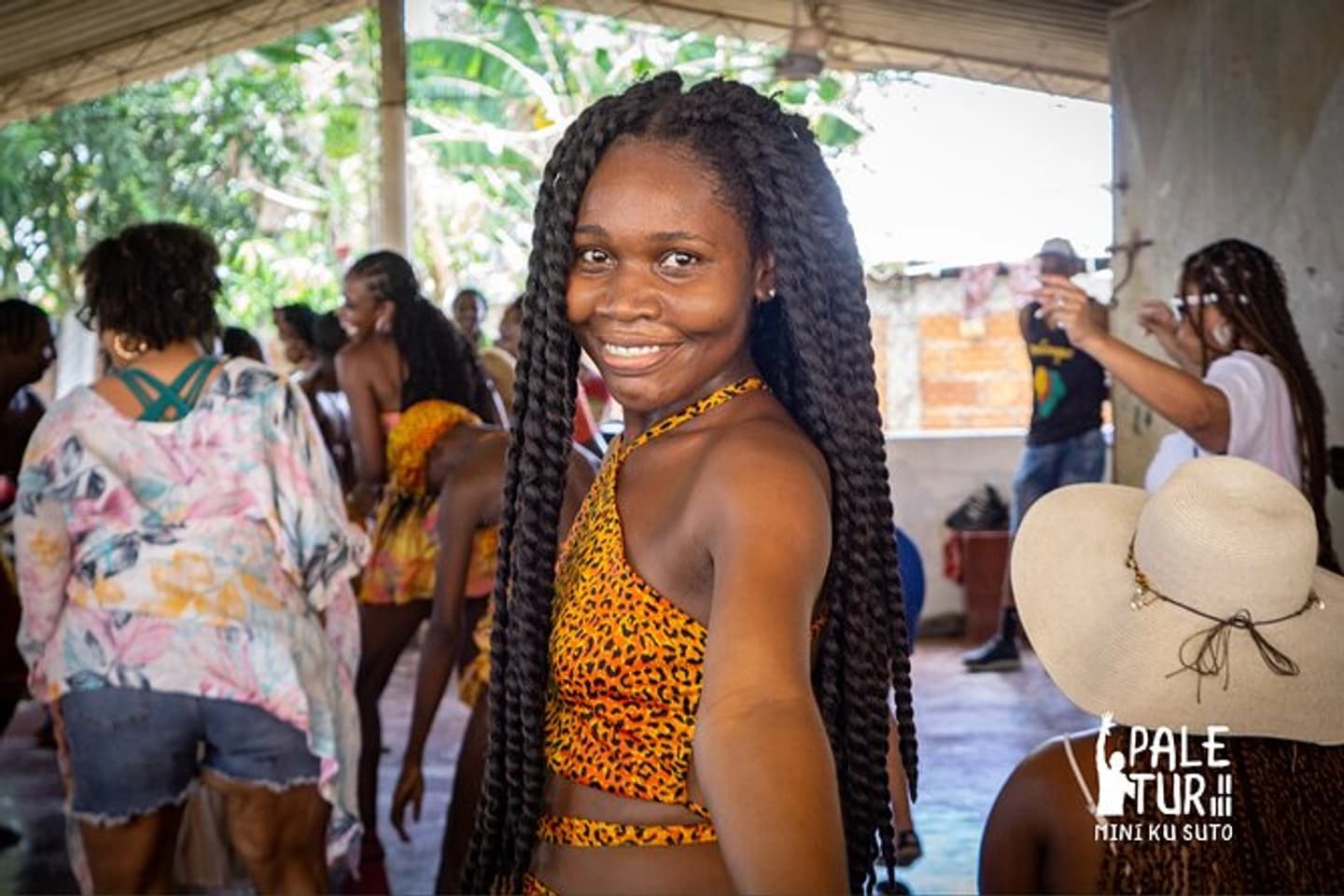
San Basilio de Palenque is between one and one and a half hours from Cartagena, founded by people who escaped slavery.
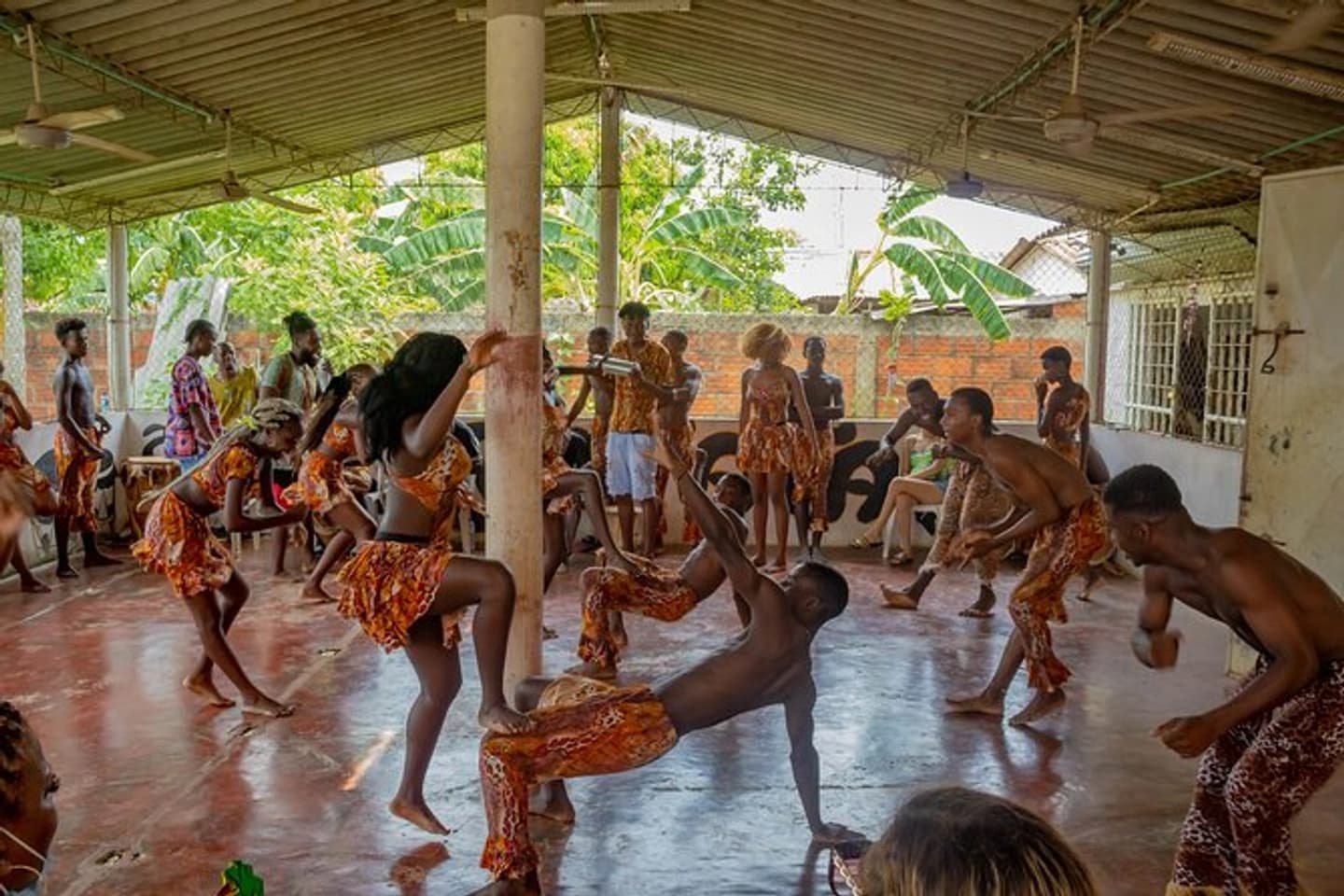
Today it is a town with its own music, cuisine, and language: here the Palenquerois still spoken, a creole language born from the contact between Spanish and African languages.
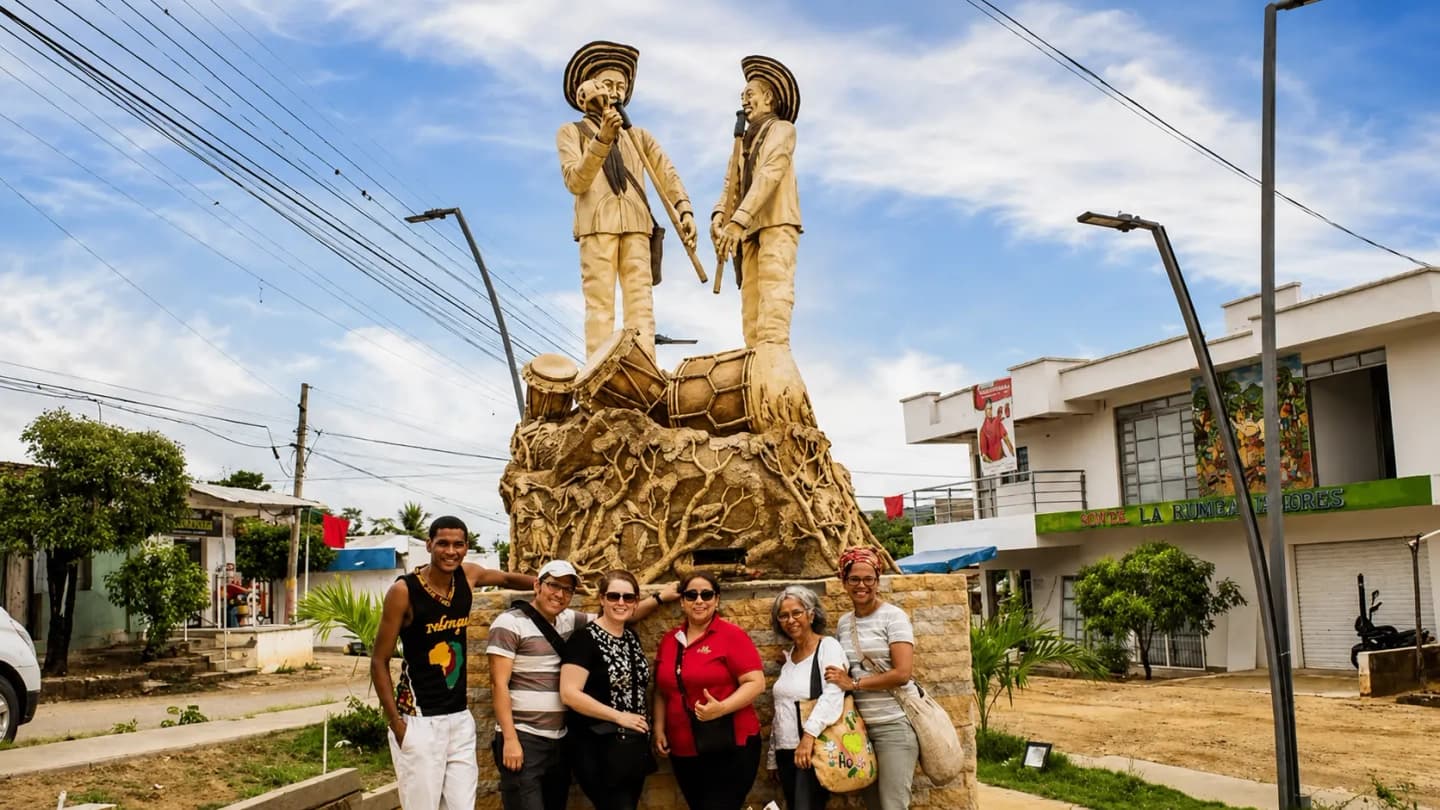
In town there are murals and the monument to Benkos Biohó, remembered as the leader of the escape, and you can enjoy traditional music and dance.
You can try traditional sweets, like cocadas, made of coconut, and enyucados, made of yuca.
In October, the Drums and Cultural Expressions Festivalis celebrated, a great occasion to hear drums live.
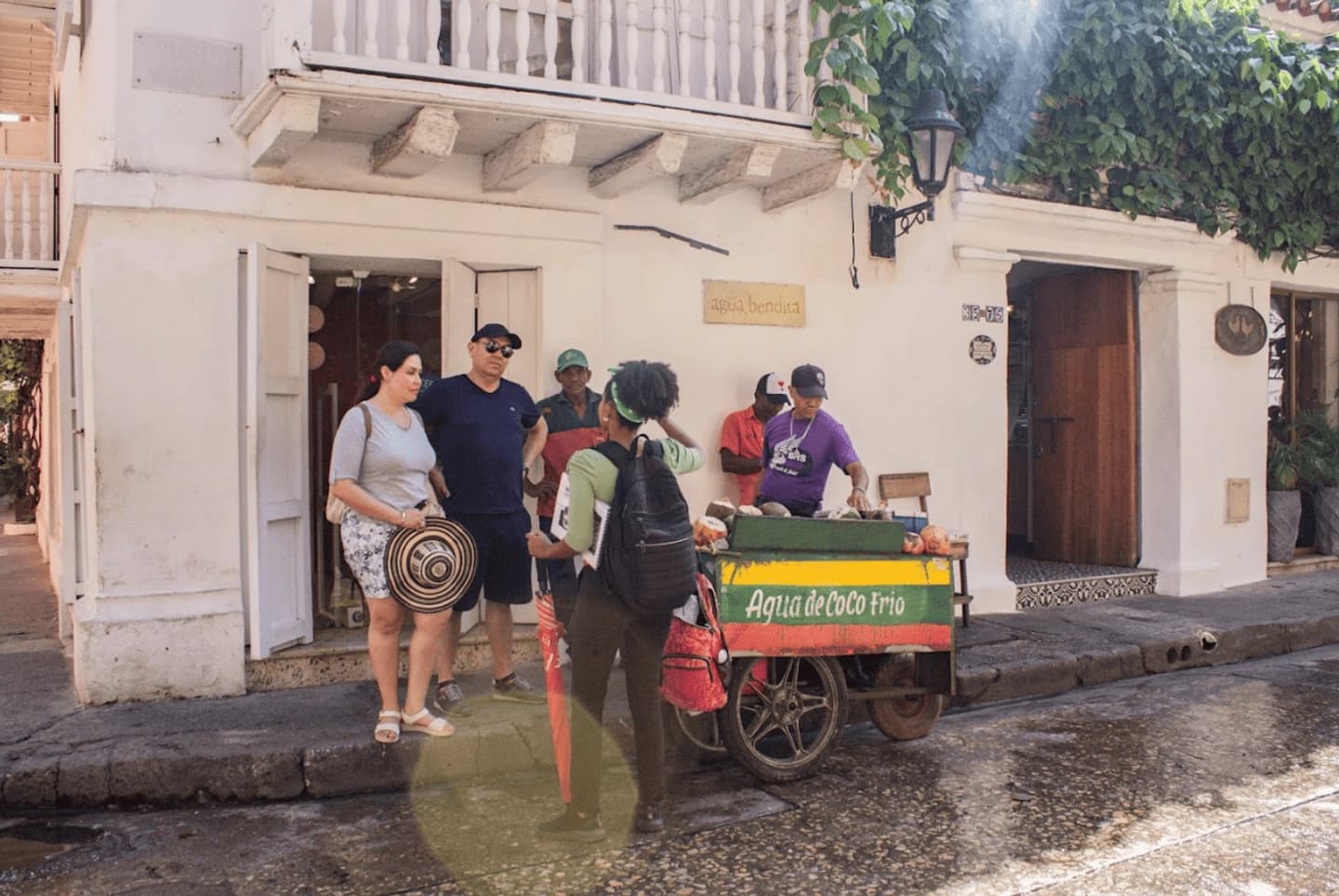
To explore the town with a local guide and transportation from Cartagena, there are tours of different durations, including a private one.



María La Baja: bullerengue and marsh
María La Baja is an hour and a half from Cartagena, on a plain next to the Canal del Dique.
It is known for bullerengue, a drum and singing rhythm of Afro-Colombian roots.
Around December 8th, the National Bullerengue Festivalis celebrated, along with the festivities of the Immaculate Conception.
The rest of the year you can explore the María La Baja Marsh, a wetland with many fish.
San Jacinto: flutes and hammocks
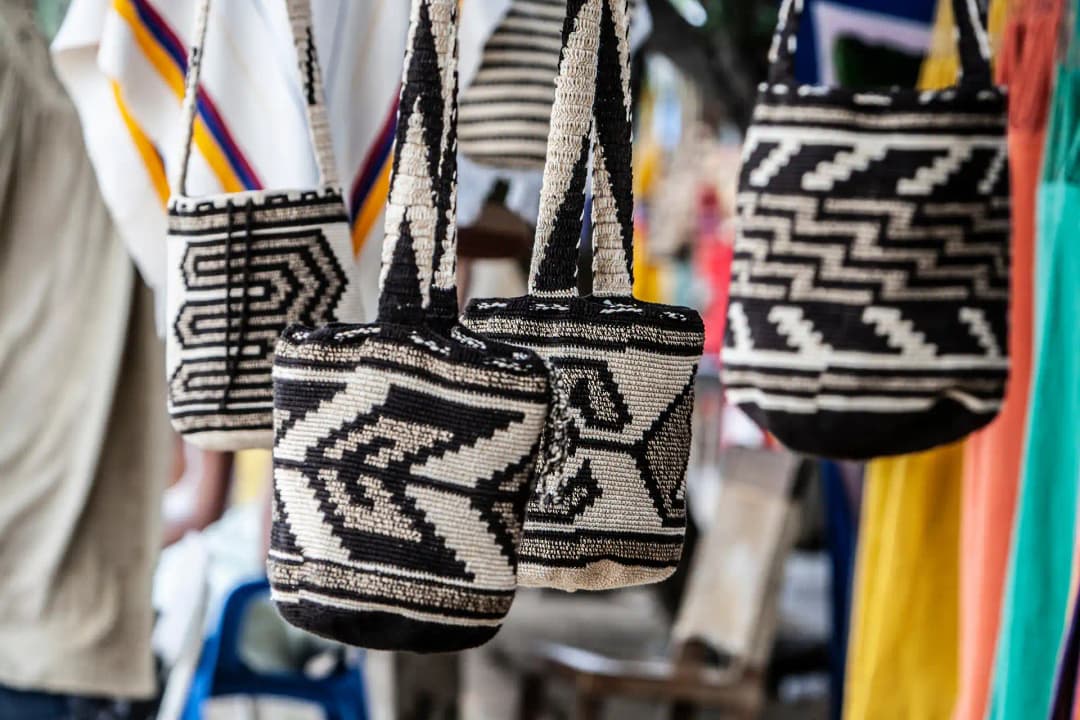
In San Jacinto music and craftsmanship go hand in hand.
Here they play flutes, which accompany cumbia and are made from cardón, a cactus.
Hammocks are woven on vertical looms.
In August, the National Indigenous Flute Festival.
is celebrated.
For walking, there are ecological trails with petroglyphs, which are rock carvings, and coffee routes. The Community Museum
holds archaeological and ethnographic pieces from the Zenú and Malibú indigenous peoples of the region.

To see the hammock loom and hear live flutes, there is a cultural tour from Cartagena.
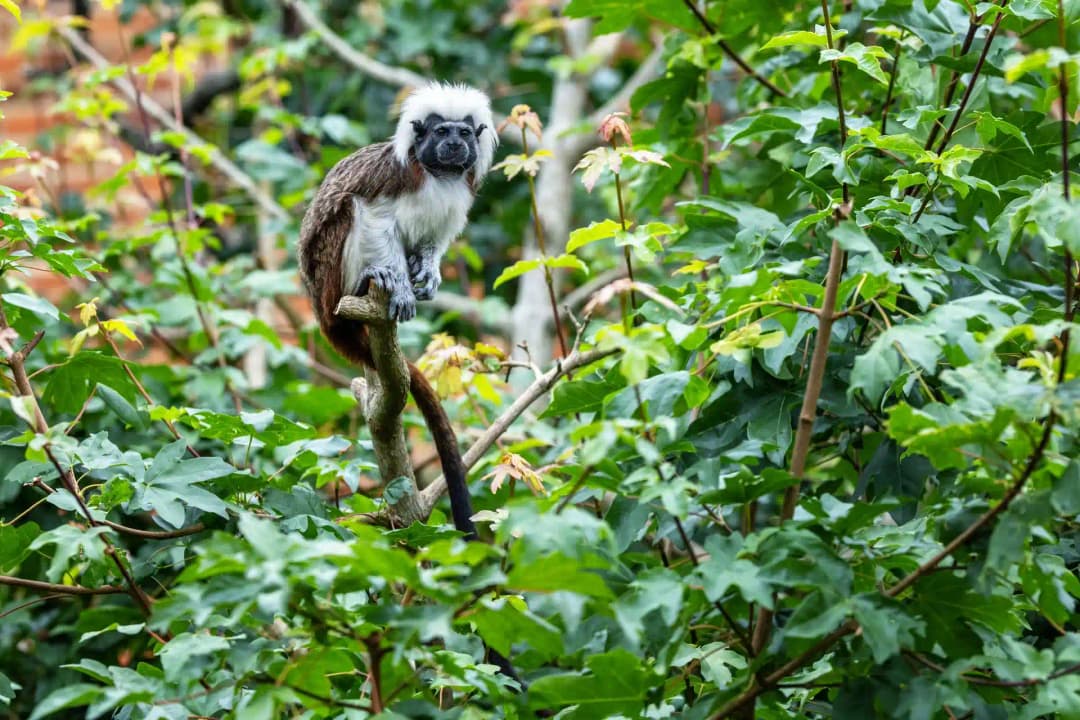
San Juan Nepomuceno: the dry forest of Los Colorados In San Juan Nepomuceno you canwalk through a dry forest , which loses its leaves in the dry months, and meet thewhite-headed titi monkey
, a small primate with a white crest on its head that only lives in Colombia. It is theLos Colorados Fauna and Flora Sanctuary
, which according to the National Natural Parks protects one of the best-preserved tropical dry forests in the Colombian Caribbean.
The Planeta Bosque trail has a low to medium difficulty.
Also living there are three-toed sloths, howler monkeys, and more than two hundred eighty bird species.
Towns for a weekend
These two destinations are on the banks of the Magdalena River, several hours from Cartagena, so they require at least one night.
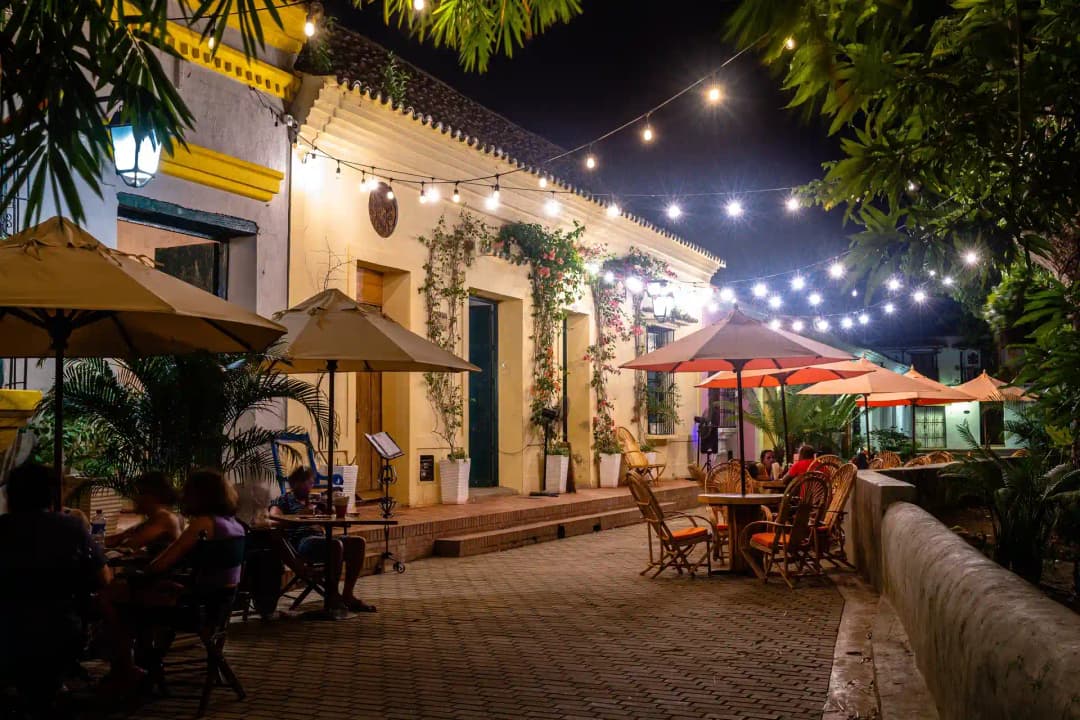
Mompox: colonial houses by the riverMompox officially Santa Cruz de Mompox, is on the banks of the Magdalena River and preserves the layout and much of the buildings of its historic center, which is a.
World Heritage Site
It is five or six hours from Cartagena. Here you can walk among colonial houses
with patios, balconies, and galleries designed for the climate.
Instead of a central square, it has three squares aligned along the river, each with its own church. In the streets, goldsmiths still work makingfiligree
, a technique of fine gold and silver threads.
Its Holy Week, which occurs in March or April depending on the year, features a procession called paso robado, where the Nazarenes advance two steps and retreat one. If you plan to travel during those dates, you have more ideas in the guide to.
Holy Week in Colombia
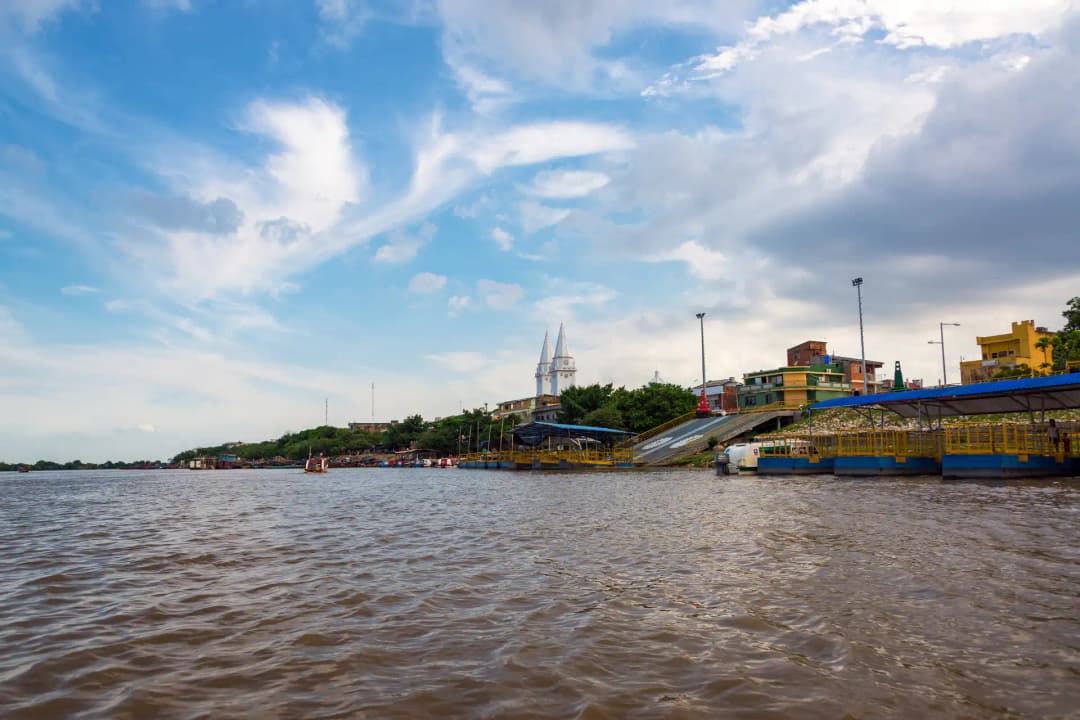
Magangué: the river port Magangué
is a large municipality, the second most populated in Bolívar, and pairs well with Mompox. It is four or five hours from Cartagena and is known as theCapital of the Rivers
because in this area the Magdalena, Cauca, and San Jorge rivers meet. Here you can take a boat ride on the river and theYatí Marsh
, where you can see birds and fish artisanally. In the center is theCathedral of Our Lady of Candelaria
, around which the Virgin’s festivities are concentrated in early February.
For food, there is fried mojarra with coconut rice and rice with bocachico, a river fish.
If you come from Mompox, there are chalupas, small boats, that cross the river in about an hour.
Which town suits you? We know some travelers seek history, others music, and others nature, so we created this section to choose among the towns near Cartagena
based on what you want to experience. If you like history and the sea:
choose Bocachica. You arrive by boat and tour an eighteenth-century fort. If you like nature without going far:
choose La Boquilla or Turbaco. Paddle among mangroves or walk through a botanical garden. If you want to try something different:
choose Santa Catalina. Climb a mud volcano and bathe in the crater. If you are interested in Afro-descendant history:
choose San Basilio de Palenque. Hear a language that only exists there and discover a town with its own music and cuisine. If you like music:
choose San Jacinto or María La Baja. Listen to flutes or bullerengue, depending on the time of year. If you like walking and seeing animals:
choose San Juan Nepomuceno. Walk a trail in a dry forest with monkeys and birds. If you like colonial architecture:
choose Mompox. Walk among houses with patios, balconies, and squares by the river. If you like rivers and traditional festivals:
choose Magangué. Take a boat ride through the marsh and, in early February, attend the Virgin of Candelaria festivities. If you prefer swimming or enjoying the water: choose La Boquilla, or check out the Rosario Islands and Barú, which are beaches, not towns. To decide, see the guide to.
day trips in Cartagena
Frequently asked questions about the towns near Cartagena
When to visit these towns? From December to April, when it rains less.
From May to November, it’s best to leave early because rains usually come in the afternoon.
How to get to these towns? By road, and by boat from La Bodeguita pier if you’re going to Bocachica.
For the volcano, Galerazamba, Turbaco, San Jacinto, and Palenque, there are organized tours from Cartagena.
Can you combine several towns in one day? Yes, but it’s best to choose one or two per day.
The volcano and Galerazamba can be done together, and Palenque takes almost a whole day.
Live your getaway in the towns near Cartagena Choosing among ten towns near Cartagena
is easier if you start with the time you have. With ahalf-day
, Bocachica, La Boquilla, or Turbaco fit in a trip from Cartagena. With aday trip
, the decision depends on what you want to experience: mud, music, hikes, or Afro-Colombian history. And with aweekend
, Mompox and Magangué let you stay by the Magdalena River at a relaxed pace. When you have your date, on Tur.com