Discover Huaraz: the capital of trekking and snow-capped peaks in the Peruvian Andes
Discover Huaraz, the capital of the Áncash Department and the most important starting point to explore Huascarán National Park and the Callejón de Huaylas. Located at 3,052 meters above sea level with the snow-capped peaks of the Cordillera Blanca as a backdrop, Huaraz is the capital of mountaineering and trekking in Peru. From here depart the country's most famous circuits: the Santa Cruz Trek, Laguna 69, and the Huayhuash circuit. The city has a well-established offer of agencies, certified guides, equipment rental, and restaurants for mountain travelers. An essential destination for those seeking high-altitude adventure in the Peruvian Andes.
Favorite experiences to do in Huaraz
The best time to visit Huaraz is from May to September, during the dry season, when the sky is clear, the snow-capped peaks are fully visible, and the trails are in perfect condition. June, July, and August are the busiest months, with groups of trekkers from all over the world on the most popular circuits, so it is advisable to book guides and accommodation well in advance. Keep in mind that nights are very cold all year round, with temperatures dropping below 5°C even in the dry season, so warm gear is essential. If you travel between October and April, it is good to know that rains are frequent and some high mountain trails may be in difficult conditions.
Huaraz has a cold mountain climate, dry and sunny in the dry season and rainy in the wet season. At 3,052 meters above sea level, temperatures range between 4°C and 18°C during the day in the dry season, with nights dropping to 2°C or less. In the rainy season, from October to April, temperatures are similar but with frequent precipitation. Sunny days in the dry season are very intense due to the altitude, so sunscreen is essential. It is recommended to wear warm layered clothing, appropriate trekking gear, and take at least one day to acclimate before ascending to higher altitudes.
Frequently asked questions
According to tourists who visited Huaraz, the must-do activities on a first visit are:
- Wilcacocha Lagoon: An easily accessible glacial lagoon, ideal for initial acclimatization with panoramic views. You can get there by collective transport and then hike.
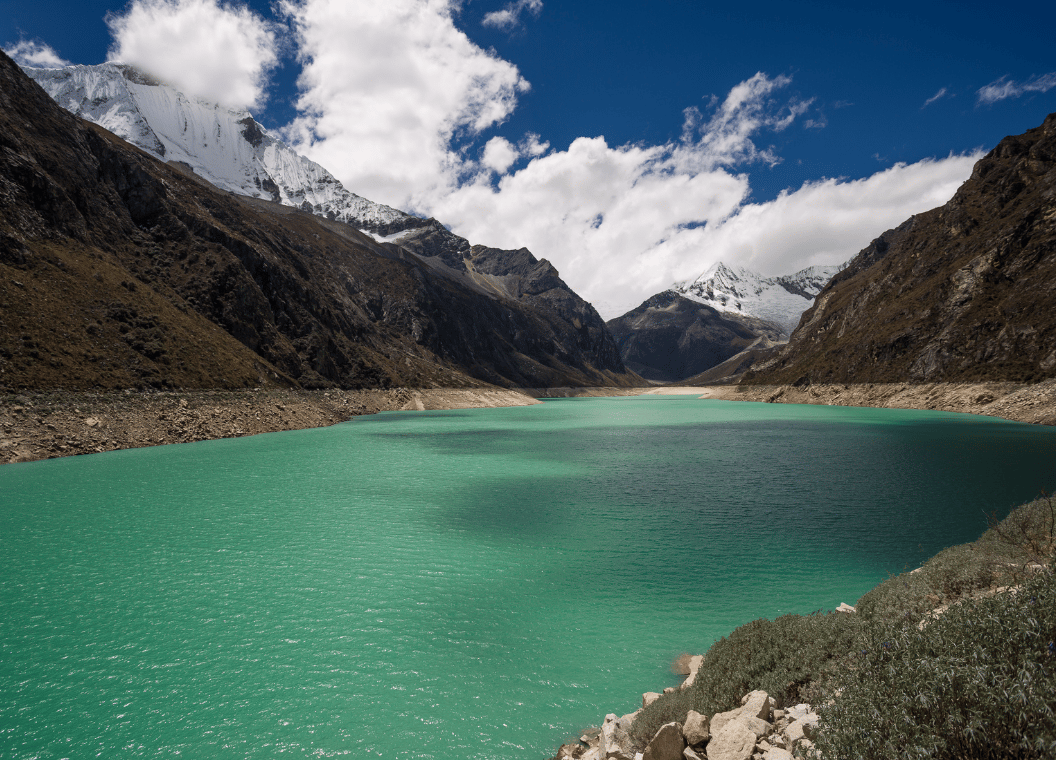
- Parón Lagoon: The largest lagoon in the Cordillera Blanca, with turquoise waters. You can reach it by vehicle close to the shore.
- Churup Lagoon: An impressive glacial lagoon that requires a moderately difficult hike to reach.
- Pastoruri Glacier: Allows you to get close to one of the few accessible glaciers without a long trek.
- Áncash Archaeological Museum: Houses important archaeological pieces from the pre-Incan cultures of the region.
The highest-rated activities by tourists in Huaraz are:
- Santa Cruz Trek: One of the most famous treks in South America, crossing valleys and glacial lagoons. Generally lasts 4 days, reaching 4,750 m.
- Huayhuash Circuit: A highly demanding trek that surrounds one of the most spectacular mountain ranges in the world, lasting between 6 and 12 days.
- Ascent to Nevado Mateo: Considered the most accessible ascent for a first experience in high mountains (5,150 m), it is done in one day.
- Visit to Chavín de Huántar: Exploration of one of the most important archaeological sites in Peru, declared a UNESCO World Heritage Site.
- Lagoon 69: One of the most famous and beautiful glacial lagoons, with intense turquoise waters (4,600 m).
From Huaraz, you can take the following day trips:
- Wilcacocha Lagoon: 20 minutes by collective transport + hike; ideal for acclimatization.
- Parón Lagoon: 3-4 hours (tour); you can get almost to the shore by vehicle.
- Lagoon 69: Full day (includes travel and hike); one of the most iconic lagoons.
- Pastoruri Glacier: Full day; allows you to see a glacier up close without the need for a long trek.
- Chavín de Huántar: Full day (approximately 3-4 hours each way); pre-Incan archaeological complex, a UNESCO World Heritage Site.
At least 4 days are recommended to visit Huaraz, allowing for acclimatization and visits to some lagoons and points of interest. An ideal stay of 7 days enables you to explore more lagoons, do short treks, and enjoy the local culture. Stays of 10 days or more are perfect for long treks like Santa Cruz or the Huayhuash circuit, or for ascents to snow-capped mountains. The duration depends on the need for acclimatization, the variety of activities desired, and the interest in high mountain experiences.
The high season (June-September) offers dry weather and clear days, ideal for outdoor activities, but with higher crowds and prices. The low season (November-March) is rainy, with unstable weather and lower visibility, but fewer tourists and lower prices. The ideal season is from April to May and October, providing a good balance between favorable weather (little rain, clear days) and fewer tourists, with potentially lower prices. Temperatures range from 5°C to 21°C depending on the season.
Traveling to Huaraz has a moderate cost. A daily budget for backpackers ranges from $30 to $50 USD, while a mid-range trip is estimated between $60 and $100 USD. A comfort budget ranges from $120 to $200 USD per day. Reference costs are: budget food $2-$4 USD, public transport $0-$3 USD, and entrance to attractions $3-$8 USD. An example budget for 5 days, including basic/mid-range accommodation, meals, and 2-3 tours, is around $250-$500 USD per person.
You can enjoy Huaraz economically by exploring the Huaraz Main Square and the Rataquenua Viewpoint, both free to access. There is also the option of a Free Walking Tour of the historic center, based on voluntary tips. For low-cost tours, a visit to Llanganuco Lagoon through a full-day tour costs approximately S/ 40-60 (about $13 USD), including transportation. The Áncash Archaeological Museum offers a low-cost cultural option. For guided tours, Tur.com highlights:
- Wilcacocha Full Day
- Llanganuco Lagoon Tour
- Monterrey Hot Springs Half Day.