Juan Fernández Archipelago: nature, islands, and adventure
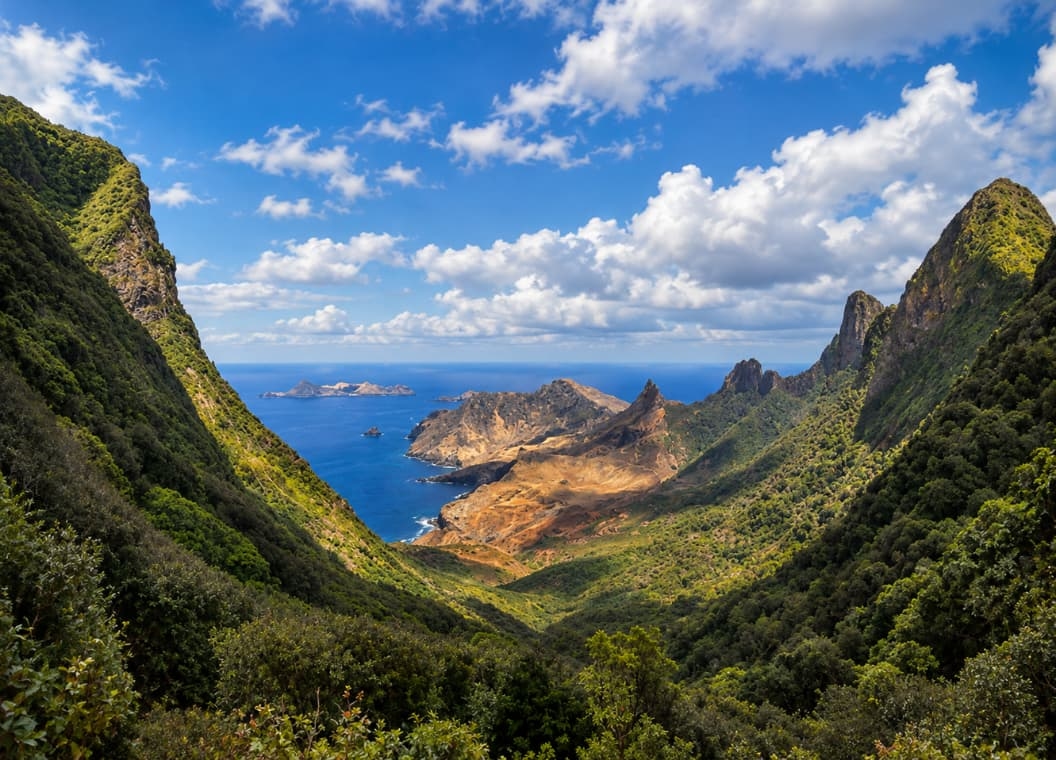
The Juan Fernández Archipelago is a group of volcanic islands located in the South Pacific Ocean, more than 600 kilometers off the coast of the Valparaíso Region, Chile. Mainly composed of Robinson Crusoe, Alejandro Selkirk, and Santa Clara islands, it stands out for its mountainous landscapes, cliffs, and extraordinary biodiversity. Recognized as a UNESCO Biosphere Reserve, it is home to endemic species such as the Juan Fernández firecrown hummingbird and the two-haired Chilean dolphin. Its main settlement, San Juan Bautista, is located in Cumberland Bay on Robinson Crusoe Island. The archipelago also preserves a fascinating history linked to sailors, corsairs, and Alexander Selkirk, whose experience inspired the novel Robinson Crusoe. Its mountain trails, coastal landscapes, and waters rich in marine life offer opportunities for ecotourism and wildlife observation. The local cuisine, especially the traditional Juan Fernández lobster, complements an island experience marked by nature, history, and tranquility.
Activities and tours in the Juan Fernández Archipelago
The best time to visit the Juan Fernández Archipelago is from November to March, during the austral spring and summer. During these months, temperatures are usually more pleasant and weather conditions generally favor hiking, tours around Robinson Crusoe Island, and sea-related activities. It is a recommended period to explore trails, admire volcanic landscapes, and observe local biodiversity. However, due to its oceanic location, winds and sea conditions can change rapidly and affect flights or boats. It is advisable to plan the trip with flexibility and check access conditions to protected areas.
The Juan Fernández Archipelago has a maritime subtropical climate, moderated by the influence of the Pacific Ocean, with temperatures generally ranging between 12 °C and 22 °C. During summer, mild conditions and periods of lower precipitation prevail, favorable for exploring natural landscapes. In winter, especially between May and August, rainfall increases and strong winds may occur, affecting outdoor activities and maritime and air connections. Humidity and weather conditions can vary throughout the day. To explore its trails and coastal areas, it is recommended to wear comfortable clothing, trekking shoes, sun protection, a waterproof jacket, and warm clothing for temperature changes.